
The 2026 SSI market landscape
The Self-Sovereign Identity (SSI) market is undergoing a violent expansion. Valued at USD 6.87 billion in 2026, the sector is projected to reach USD 74.88 billion by 2030, growing at a compound annual growth rate (CAGR) of 81.7% [1]. This trajectory signals a decisive shift from legacy identity models to decentralized systems.
Traditional KYC processes are becoming obsolete. They rely on centralized databases that are frequent targets for breaches and create friction for users. SSI replaces these silos with verifiable credentials held by the individual. This architecture reduces compliance costs and restores privacy, making it the only viable successor to the current KYC paradigm.
The speed of this adoption is driven by regulatory pressure and enterprise demand. Organizations can no longer ignore the security risks of storing sensitive user data. The move toward zero-knowledge proofs allows verification without data exposure, aligning perfectly with global privacy standards.
How zero-knowledge proofs replace document uploads
Traditional KYC works like handing over your entire passport to a border agent, who then photocopies every page and files it in a cabinet. The verifier gains access to all your personal data—name, address, birthdate, and photo—even if they only needed to confirm you are over 18. This "upload and store" model creates massive privacy risks, as centralized databases become prime targets for data breaches.
Zero-knowledge KYC flips this dynamic by allowing you to prove an attribute without revealing the underlying information. Using cryptographic proofs, you can demonstrate that you meet a specific criteria—such as residing in a certain country or holding a valid credential—without exposing the actual document or personal details. The verifier receives a mathematical confirmation that the data exists and is valid, but never sees the data itself.
This shift moves identity verification from a data collection exercise to a proof of possession. Instead of trusting a third party to safeguard your sensitive documents, you retain full control. The system validates the credential's authenticity through decentralized ledgers while keeping your private information strictly local to your device.
The difference in security posture is stark. Traditional methods rely on the defender's ability to protect stored data, a challenge that grows harder as databases expand. Zero-knowledge systems eliminate the liability of storing PII entirely, reducing the attack surface for both users and service providers.
| Feature | Traditional KYC | Zero-Knowledge KYC |
|---|---|---|
| Data Exposure | Full document upload (PII visible) | Minimal disclosure (only verified attributes) |
| Storage Risk | Centralized databases vulnerable to breaches | No sensitive data stored by verifier |
| User Control | Limited; data leaves user's possession | High; user retains control of credentials |
| Verification Speed | Manual review or slow automated checks | Instant cryptographic validation |
| Feature | Traditional KYC | Zero-Knowledge KYC |
|---|---|---|
| Data Exposure | Full document upload | Minimal disclosure |
| Storage Risk | Centralized databases | No sensitive data stored |
| User Control | Limited | High |
| Speed | Slow or manual | Instant |
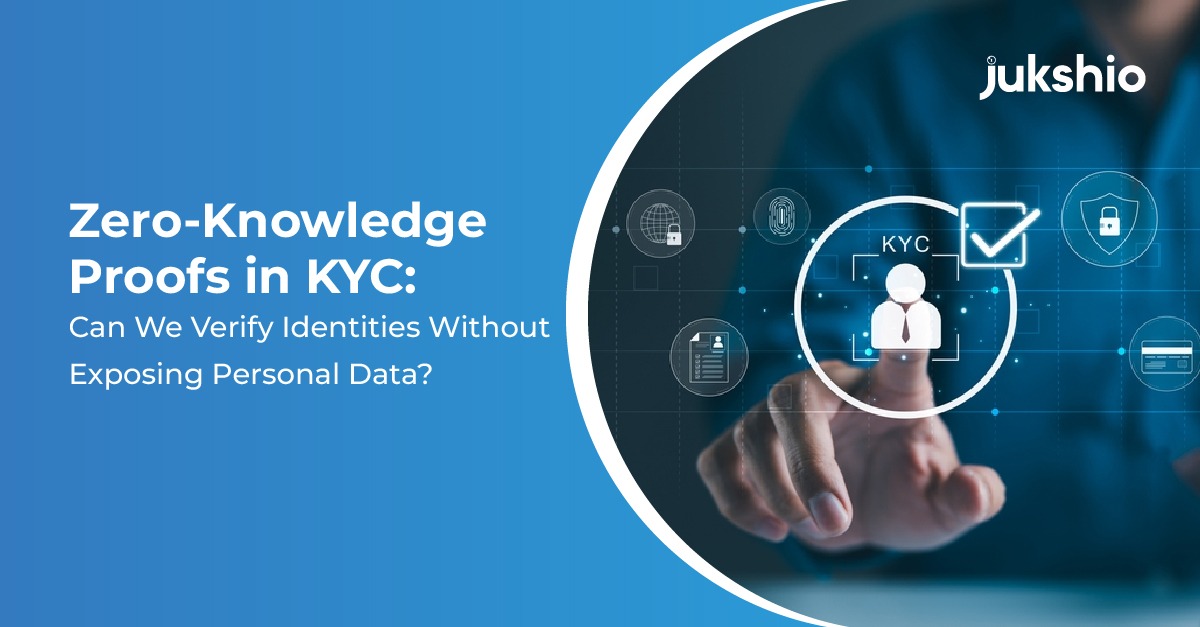
How to build a privacy-first onboarding workflow
Adopting self-sovereign identity (SSI) requires shifting from data collection to credential verification. Businesses must integrate decentralized identifiers (DIDs) and zero-knowledge proofs (ZKPs) to validate users without storing sensitive records. This workflow outlines the technical sequence for launching a ZK-KYC system in 2026.
Choose a decentralized identifier method that balances interoperability with privacy. W3C-compliant methods like DID:web or DID:ethr ensure broad compatibility across verifiers. Avoid proprietary formats that lock users into a single ecosystem, as this undermines the self-sovereign model described by New America.
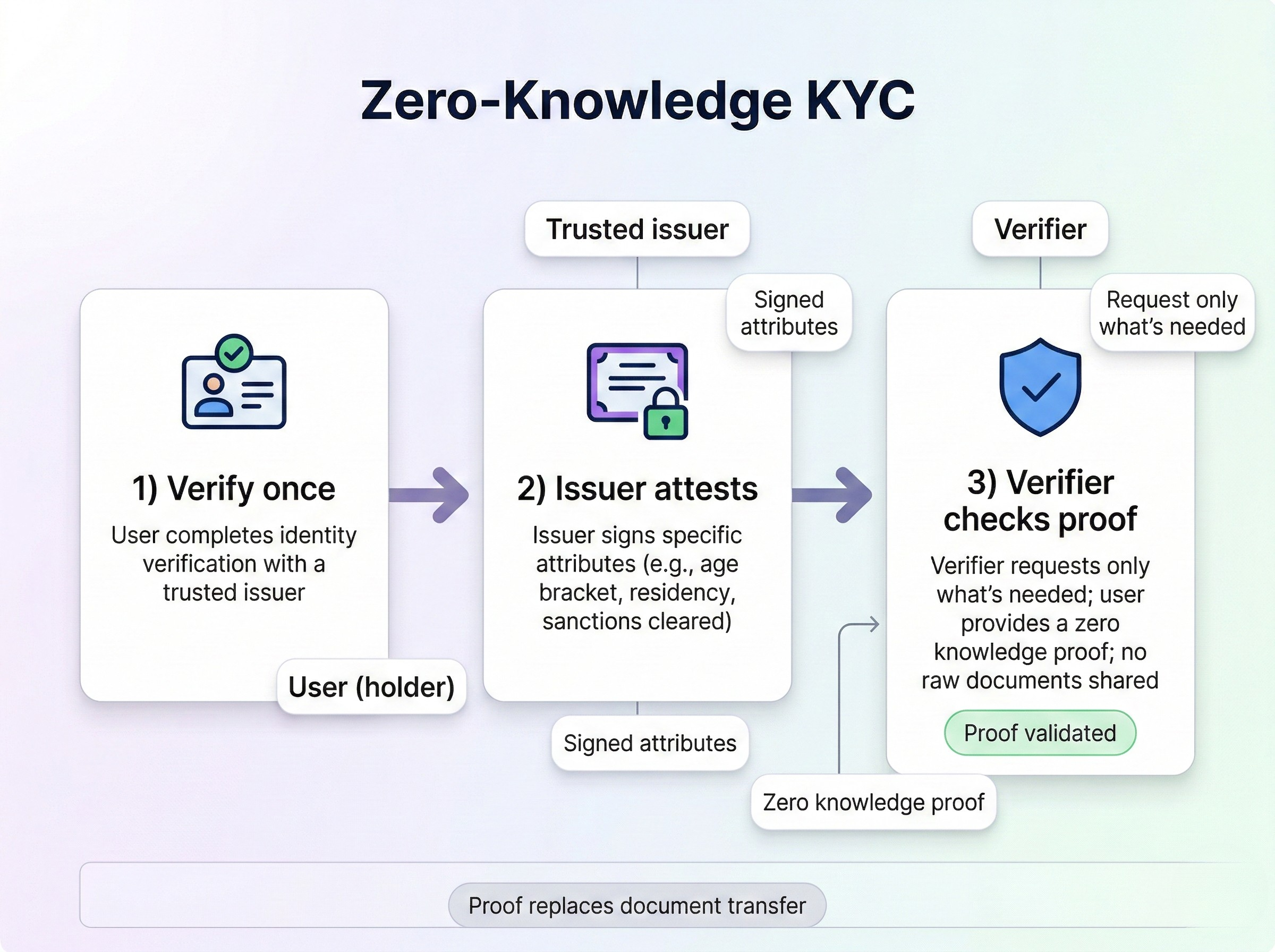
Partner with recognized authorities (government bodies, banks, or educational institutions) to issue credentials. Users receive these as digital tokens in their personal wallets. Ensure credentials are cryptographically signed so verifiers can trust their origin without contacting the issuer again.

Implement ZK circuits that allow users to prove specific attributes without revealing the underlying data. For example, a circuit can verify "age > 18" without disclosing the exact birthdate. Use established libraries like Circom or Gnark to generate these proofs efficiently on the client side.
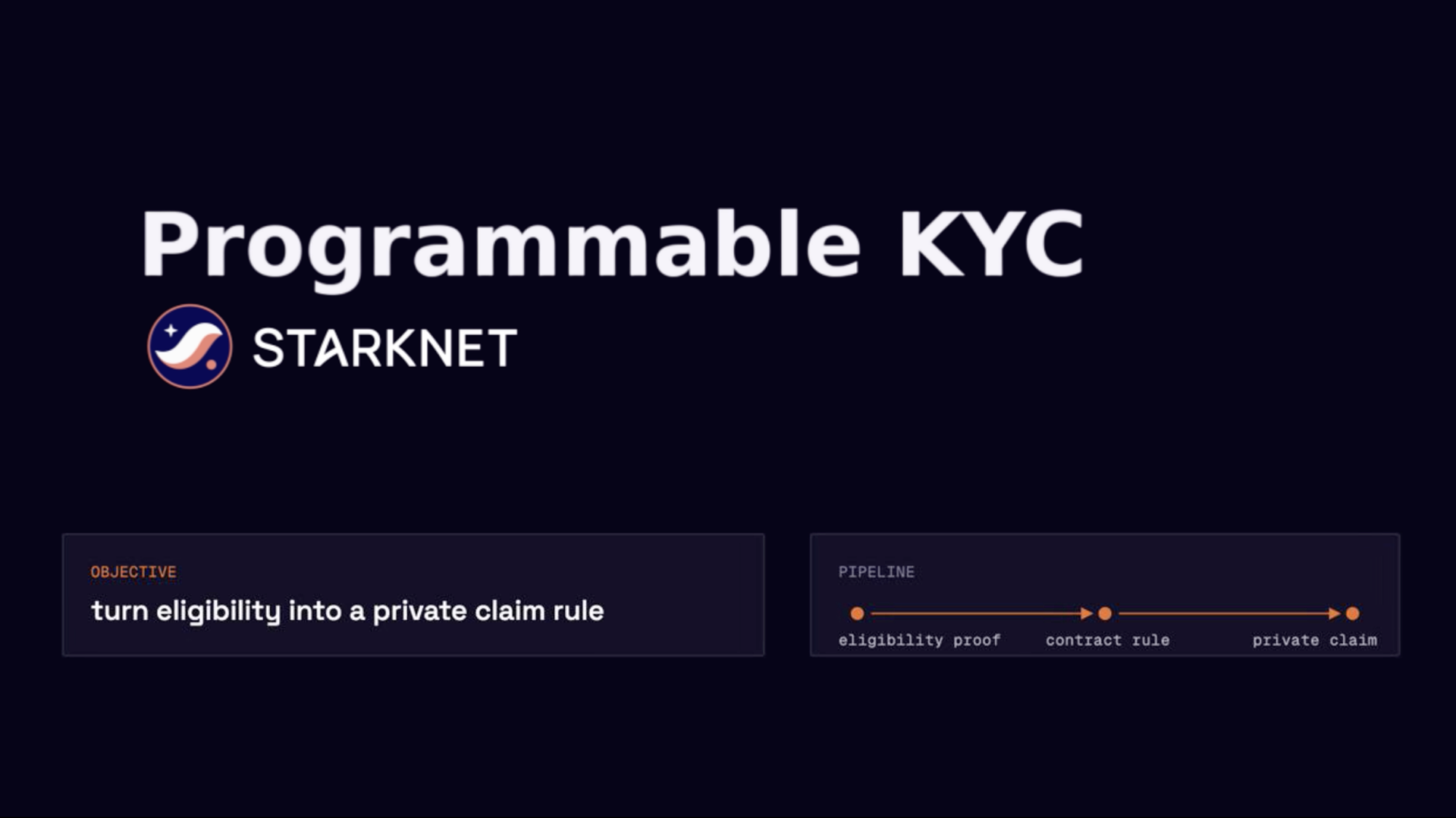
Build a verification endpoint that accepts the user’s DID and ZK proof. The system checks the cryptographic signature against the issuer’s public key and validates the proof against the circuit constraints. Reject requests where the proof fails or the credential is revoked.
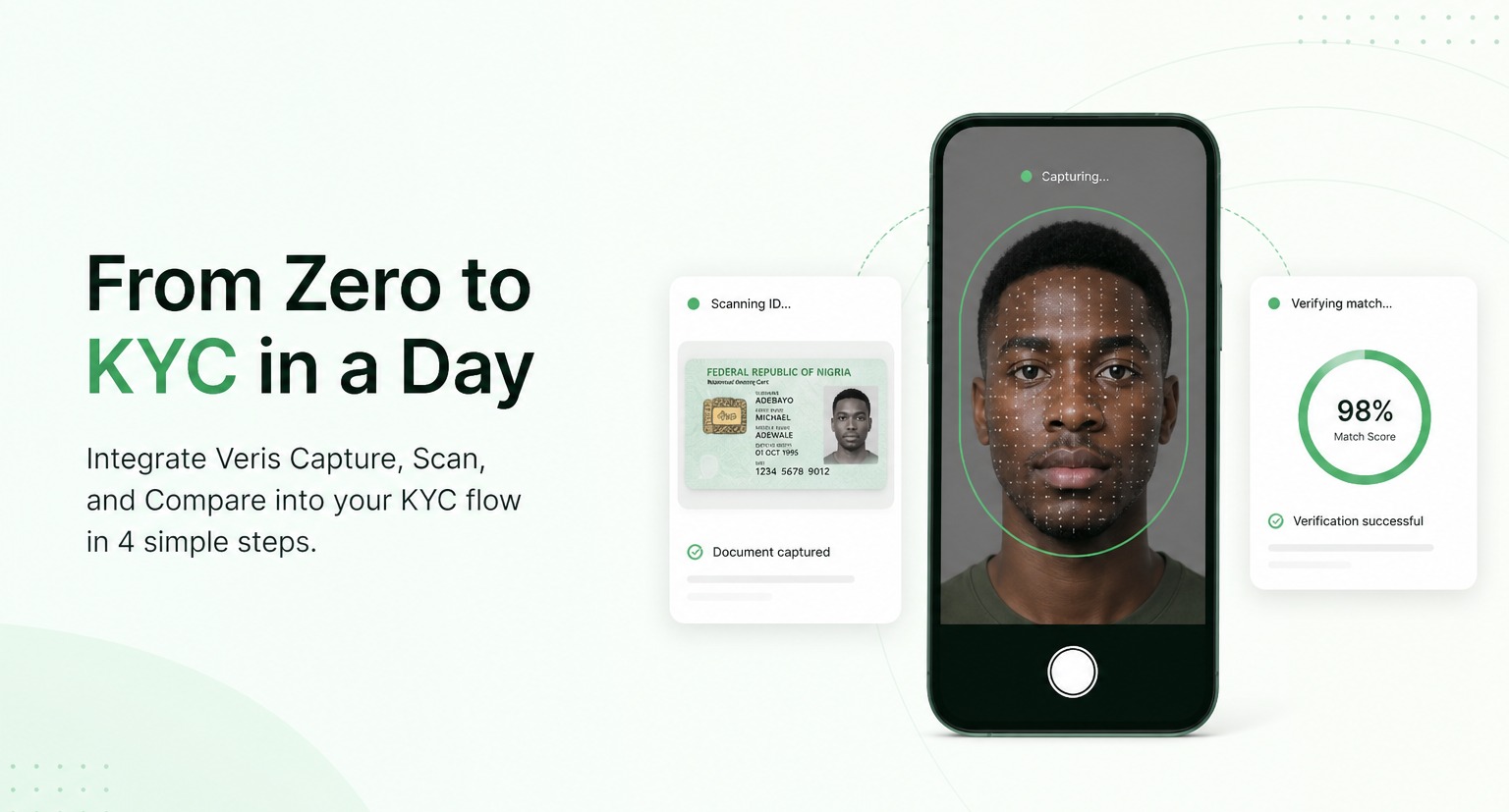
Simulate the full journey: wallet connection, credential selection, proof generation, and verification. Verify that no personal data leaks to the verifier’s database. Ensure the UX is smooth, as friction will drive users back to traditional forms.
New 2026 principles of self-sovereignty
The 2026 revision of the Principles of Self-Sovereign Identity marks a distinct departure from the original 2016 framework. While the earlier iteration focused heavily on technical ownership and data minimization, the updated principles address the sociotechnical realities of 2026: pervasive surveillance, algorithmic coercion, and the need for trust in decentralized relationships.
Three new principles stand out as the defining features of modern SSI:
Inalienability
Inalienability asserts that certain core aspects of identity cannot be transferred, sold, or revoked by third parties, including the issuer. This principle protects users from coercive data harvesting and ensures that the fundamental right to control one’s digital self remains permanent. It effectively blocks the commodification of identity data, a practice that has become standard in Web2 models.
Cognitive Liberty
Cognitive Liberty guarantees the right to mental privacy and freedom from algorithmic manipulation. In an era where biometric data and behavioral tracking are increasingly used for targeted advertising and political influence, this principle mandates that identity systems must not expose or allow the exploitation of internal mental states. It reinforces the boundary between the user’s mind and external data processors.
Relational Identity
Relational Identity shifts the focus from isolated identity objects to the context of relationships. It recognizes that identity is not a static attribute but a dynamic construct shaped by interactions with other parties. This principle supports the development of decentralized trust networks, where reputation and verification are derived from meaningful connections rather than centralized authorities.
These additions distinguish the 2026 framework by embedding ethical and social safeguards directly into the technical architecture of self-sovereign identity. The result is a system that is not just secure, but also respectful of human dignity and autonomy.
Key questions on SSI adoption
The shift toward zero-knowledge KYC brings specific regulatory and technical questions. Below, we address the most common concerns regarding compliance, data storage, and user recovery in the 2026 landscape.
No comments yet. Be the first to share your thoughts!