
What zero-knowledge identity means
The rise of zero-knowledge identity systems marks a structural shift in how digital trust is established, moving from data possession to cryptographic verification. This protocol allows a user to prove they possess specific credentials without revealing the underlying data. In traditional identity systems, verifying age requires handing over a driver’s license, exposing your full name, address, and exact birth date. With zero-knowledge identity, the system confirms only that you are over 18, leaving the rest of your personal information private.
This mechanism relies on zero-knowledge proofs (ZKP), a concept formalized by researchers at MIT in the 1980s. As defined in the European Digital Identity Wallet architecture, a ZKP enables one party (the prover) to convince another (the verifier) that a statement is true without revealing any information beyond the validity of the statement itself [1]. The W3C Verifiable Credentials Data Model supports this by allowing verifiable presentations that can be cryptographically proven without disclosing the full credential [2].
A common analogy is the "zero-knowledge cave." Imagine a circular cave with a locked door in the middle. Alice wants to prove to Bob that she knows the password to open the door, but she does not want to tell him the password. Bob stands outside while Alice enters the cave. Bob then calls out either "left" or "right." If Alice knows the password, she can open the door and exit on the side Bob requested. If she doesn't know it, she can only succeed by chance. Repeating this process multiple times convinces Bob she knows the password without him ever learning it.
For legal and regulatory contexts, this distinction is critical. Traditional data collection creates a liability burden: if a company stores your passport scan and it is breached, your identity is compromised. Zero-knowledge identity shifts the model. The verifier never sees the raw data, only the cryptographic proof that the data meets specific criteria. This reduces the scope of regulated personal data, aligning with privacy-by-design principles found in frameworks like the EU’s GDPR and the upcoming eIDAS 2.0 regulations.
[1] https://eu-digital-identity-wallet.github.io/eudi-doc-architecture-and-reference-framework/2.4.0/discussion-topics/g-zero-knowledge-proof/ [2] https://www.w3.org/TR/vc-data-model-2.0/
Why 2026 drives the KYC zero shift
The regulatory landscape for identity verification is undergoing a structural pivot. By 2026, the traditional model of KYC—where institutions collect, store, and verify raw personal data—is becoming legally and technically unsustainable. This shift is not about eliminating verification, but about moving from data hoarding to cryptographic proof. The concept of "KYC zero" describes this evolution: maintaining strict compliance while minimizing the data footprint that exposes users and institutions to breach risks.
In the European Union, the Digital Identity Wallet (EUDI) framework, governed by the eIDAS 2.0 regulation, mandates the use of Zero-Knowledge Proofs (ZKPs) for age and residency verification. As outlined in the EUDI architecture and reference framework, a ZKP allows a verifier to confirm a statement is true without accessing the underlying data itself. For example, a user can prove they are over 18 without revealing their exact date of birth or full name. This aligns with the EU’s broader data minimization principles under the GDPR, reducing the liability of centralized data stores.
Similarly, US state-level privacy laws are tightening the constraints on data retention. California, Virginia, and Colorado have all passed legislation limiting the purpose and duration for which personal data can be processed. Traditional KYC vendors, which rely on storing identity documents and biometric hashes, now face compliance costs that outweigh the benefits. Institutions are forced to adopt zero-knowledge workflows where verification happens on-device or through trusted third-party attestations, ensuring that sensitive PII never enters the institution’s own database.
The market pressure is equally significant. Consumers are increasingly aware of the risks associated with centralized identity databases. High-profile breaches have demonstrated that storing raw identity data is a persistent security liability. By adopting ZK-based verification, financial institutions and service providers can meet regulatory requirements for identity assurance while adhering to the principle of least privilege. This approach transforms KYC from a data collection exercise into a privacy-preserving compliance mechanism, aligning legal obligations with user expectations for digital sovereignty.
GDPR and AI compliance benefits
Zero-knowledge proofs (ZKPs) align directly with the European Union’s General Data Protection Regulation (GDPR) by enforcing data minimization at the cryptographic level. Under GDPR Article 5(1)(c), organizations must limit data processing to what is strictly necessary. Traditional identity verification requires collecting and storing sensitive attributes—such as full dates of birth or government ID numbers—creating a large, static data surface that is vulnerable to breaches. ZKPs invert this model: the verifier receives only a boolean result (true or false) rather than the underlying data itself.
This mechanism reduces liability by ensuring that personal identifiable information (PII) does not leave the user’s device. For example, instead of transmitting a scanned passport to prove age eligibility, a system can generate a proof that the user is over 18 without revealing the actual birth date. This approach supports the GDPR principle of privacy by design, as the data controller never holds the raw sensitive data in the first place. The European Digital Identity Wallet architecture explicitly references ZKPs as a method to achieve this selective disclosure, allowing users to prove attributes without exposing the full identity document [EU Digital Identity Wallet].
The compliance advantages extend to emerging AI regulations, such as the EU AI Act, which impose strict requirements on data quality and transparency. By limiting the data surface area, ZKPs reduce the risk of model inversion attacks and unauthorized inference from training datasets. When AI systems verify identity or eligibility, they interact with cryptographic proofs rather than raw biometric or demographic data. This separation ensures that even if an AI model is compromised, the underlying personal data remains inaccessible. The World Wide Web Consortium (W3C) recognizes this capability, noting that ZKPs allow for verification of claims without revealing the data that supports them [W3C Verifiable Credentials].
This alignment creates a robust framework for regulatory compliance. Organizations can demonstrate adherence to GDPR’s minimization mandate and the AI Act’s data integrity requirements by implementing ZKP-based verification flows. The technology shifts the burden of proof from data storage to cryptographic validation, effectively shrinking the attack surface while maintaining legal certainty. As regulatory scrutiny on AI data practices intensifies, ZKPs offer a technical solution that satisfies both privacy and verification needs without compromising user trust.
Real-world verification examples
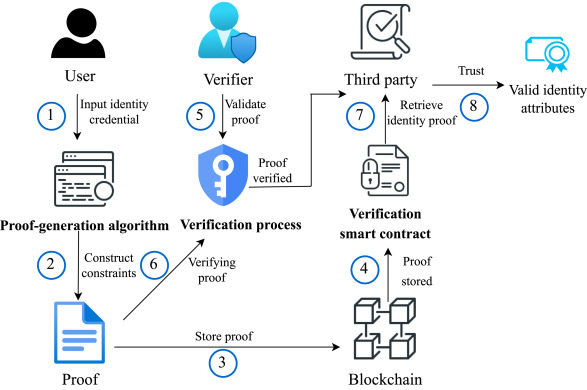
Zero-knowledge identity shifts verification from data collection to cryptographic validation. Instead of uploading sensitive documents, users generate proofs that satisfy specific criteria without exposing the underlying personal information. This approach aligns with the W3C Verifiable Credentials standard, which defines how credentials can be issued, held, and verified while preserving user privacy.
Age verification without ID scanning
Traditional age checks require submitting a driver’s license or passport, exposing the full name, address, and document number to the verifier. With zero-knowledge proofs, a user can prove they are over 18 by having a trusted issuer (like a government agency) sign a credential stating their age category. The user then generates a proof that this credential is valid and meets the age threshold, without revealing the birth date or document details.
Proof of residency without address disclosure
Financial institutions often require proof of address, forcing customers to share utility bills or bank statements containing full addresses and account numbers. Zero-knowledge identity allows a user to prove they reside within a specific jurisdiction or postal code range. The verifier receives a cryptographic confirmation that the address criteria are met, without ever seeing the actual street address or the document itself.
Employment eligibility without full resume exposure
Employers typically request full resumes or background check reports to verify work authorization. Zero-knowledge systems enable candidates to prove they possess valid work authorization or specific professional certifications without disclosing their entire employment history or personal identifiers. The employer receives a simple yes/no verification, reducing the risk of identity theft and data misuse.
Implementation checklist for 2026
Compliance officers must evaluate zero-knowledge identity solutions against strict technical and regulatory standards. The goal is to verify that a vendor’s architecture supports the privacy guarantees required by 2026 frameworks without compromising auditability. This checklist focuses on vendor due diligence, ensuring that cryptographic proofs align with official technical specifications.

Ensure the solution implements W3C Decentralized Identifiers (DIDs) and Verifiable Credentials. These standards provide the structural foundation for portable, cryptographically secure identity data. Vendors should publish their conformance reports to demonstrate adherence to these open specifications.

Confirm the vendor uses established zero-knowledge proof systems, such as zk-SNARKs or zk-STARKs, rather than proprietary black-box algorithms. The system must allow for independent verification of proofs without revealing the underlying personal data. Think of it like a locked box: the verifier confirms the contents are correct without ever seeing the items inside.
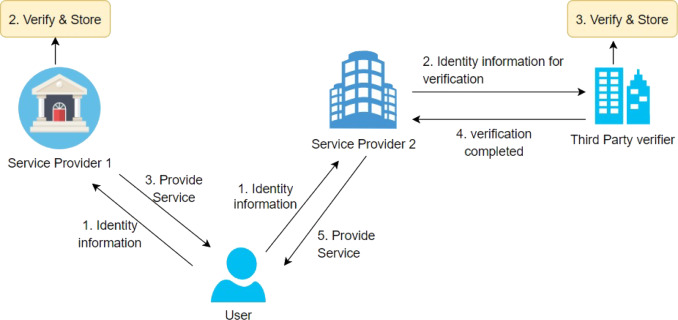
ZK identity relies on the absence of stored sensitive data. Vendors must demonstrate clear policies for the immediate deletion of any intermediate computation data. Check that the architecture does not log raw biometric or personal information on centralized servers, which would negate the privacy benefits.
Evaluating these three areas ensures that the chosen identity solution meets both technical rigor and regulatory expectations. Compliance teams should request third-party security audits and proof-of-concept demonstrations before integration.
No comments yet. Be the first to share your thoughts!