
Defining KYC Zero Architecture
The term "KYC Zero" is frequently misunderstood as a rejection of verification. In regulatory and technical contexts, it refers specifically to infrastructure built on zero-knowledge proof (ZKP) systems. This architecture allows a verifier to confirm the validity of a customer's status without accessing or retaining the underlying personal data. It is a method of verification, not an absence of it.
Traditional Know Your Customer (KYC) processes require businesses to collect, store, and manage sensitive identity documents. This creates significant liability and privacy risks. KYC Zero shifts this model. The customer generates a cryptographic proof that attests to specific attributes—such as age, residency, or sanction list status—without revealing the source data. The verifier checks the proof mathematically. If the proof is valid, the compliance requirement is met. No personal information is transferred or stored.
Note: "Zero KYC" implies no checks. "KYC Zero" implies ZKP-based checks. The latter satisfies AML/CFT requirements without data retention.
This distinction is critical for legal compliance. Academic proposals like zkKYC demonstrate how this concept removes the need for customers to share personal information with regulated businesses for KYC purposes, while still allowing the business to satisfy regulatory obligations (IACR, 2021). By using ZKP infrastructure, organizations can maintain compliance with anti-money laundering (AML) and counter-terrorist financing (CFT) standards while eliminating the centralization of sensitive identity data that characterizes traditional KYC systems.
How ZK proofs satisfy AML requirements
Zero-knowledge proof (ZKP) infrastructure enables KYC Zero by allowing a verifier to confirm a statement about a customer is true without ever accessing the underlying personally identifiable information (PII). In this framework, a prover generates a cryptographic proof that a specific predicate—such as being over 18, residing in the EU, or not being on a sanctions list—holds true. The verifier checks the proof’s validity against public parameters, confirming compliance without storing or processing the raw identity data.
This mechanism addresses the core tension in anti-money laundering (AML) compliance: the regulator’s need for verification versus the user’s right to data minimization. Traditional KYC requires centralized databases of sensitive documents, creating high-value targets for attackers. ZK proofs shift the verification logic to the cryptographic layer, ensuring that the compliance layer is as secure as the asset layer. As noted in industry analysis, this approach applies the same cryptographic rigor to compliance that underpins blockchain security, eliminating the need for data honeypots.
The technical process involves three main steps. First, the user generates a proof using their private data and a predefined circuit that encodes the compliance rules. Second, the proof is transmitted to the verifier. Third, the verifier checks the proof against the public parameters to confirm the predicate is satisfied. This process ensures that no PII is revealed during the verification, maintaining privacy while satisfying regulatory requirements.

The efficiency of ZK proofs has improved significantly with advances in cryptographic research. Modern ZK systems, such as zk-SNARKs and zk-STARKs, offer varying trade-offs between proof size, verification speed, and trust assumptions. zk-SNARKs provide short proofs and fast verification but require a trusted setup. zk-STARKs are scalable and transparent but produce larger proofs. The choice of ZK system depends on the specific compliance requirements and performance needs of the application.
For crypto platforms, ZK-KYC enables onchain compliance without compromising user privacy. Users can prove their identity status to smart contracts or decentralized applications (dApps) without exposing their real-world identity. This allows for seamless integration of regulatory requirements into decentralized finance (DeFi) protocols, enabling compliant participation in onchain ecosystems.
Reducing data breach liability
Adopting KYC Zero infrastructure fundamentally alters an organization’s exposure to regulatory penalties and litigation costs. By leveraging zero-knowledge proofs, platforms can verify user compliance without storing personally identifiable information (PII). This architectural choice eliminates the primary incentive for attackers: there is no centralized database of sensitive data to exfiltrate.
The financial implications of this shift are substantial. In the financial services sector, the average cost of a data breach remains a significant operational risk. According to industry analyses, zero-retention models offer a distinct ROI by removing the potential costs associated with breach notification, credit monitoring services, and regulatory fines. When an organization holds no customer data, the liability for a "leak" effectively drops to zero, as there is nothing to leak.
This approach aligns with the principle of data minimization, a core tenet of modern privacy regulations. By verifying identity cryptographically rather than storing it, firms reduce their attack surface. As noted by infrastructure providers like Treza Labs, this method allows for rigorous compliance checks while ensuring that PII never resides on the platform’s servers. The result is a robust defense against both malicious breaches and accidental data exposure, shielding the organization from the cascading financial and reputational damages typical of data incidents.
2026 regulatory timeline and adoption
The regulatory pressure on identity verification has shifted from voluntary adoption to mandatory infrastructure. By 2026, the convergence of the EU’s eIDAS 2 regulation and the revised Anti-Money Laundering Directive (AMLD6) creates a binding framework for KYC Zero adoption. Institutions are no longer choosing between privacy and compliance; they are being required to implement verifiable credentials that satisfy both.
The timeline below maps the critical milestones driving this transition. Each phase marks a shift in how institutions must handle identity data, moving from centralized storage to decentralized, zero-knowledge verification.
The EU’s eIDAS 2 regulation mandates the creation of the European Digital Identity Wallet (EUDI). Starting in 2026, financial institutions are required to accept these wallets as valid proof of identity. This shifts the burden of verification from the institution to the user’s wallet, enabling KYC Zero by allowing users to share only necessary attributes.

The sixth Anti-Money Laundering Directive expands the scope of customer due diligence. It requires institutions to verify beneficial ownership and transaction sources with greater precision. KYC Zero infrastructure supports this by allowing institutions to verify compliance status without storing sensitive personal data, reducing liability in case of breaches.

As regulations tighten, institutions are integrating Zero-Knowledge Proof (ZK) systems into their compliance stacks. This allows them to verify statements like "over 18" or "sanctions-free" without accessing the underlying identity data. This technical shift is critical for meeting the strict data minimization principles of modern privacy laws.
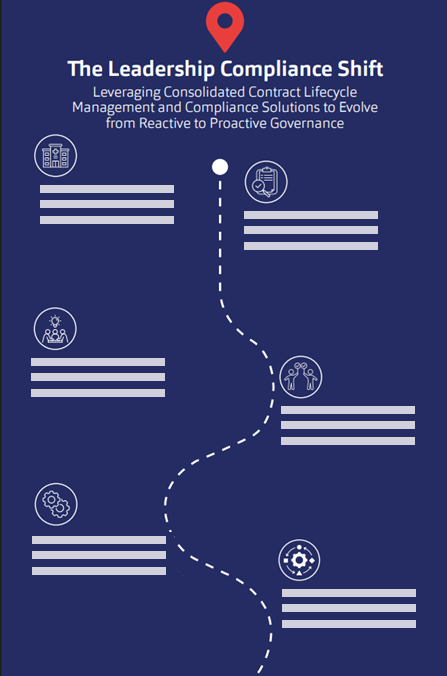
The final phase involves interoperability between national digital identity systems. As EUDI wallets become standardized across EU member states, institutions can rely on a single, trusted source of verification. This reduces friction for cross-border transactions and supports the global adoption of KYC Zero protocols.
The transition to KYC Zero is not merely a technological upgrade but a regulatory imperative. Institutions that delay adoption risk non-compliance with eIDAS 2 and AMLD6, facing significant fines and operational restrictions. The timeline above outlines the path forward, emphasizing the need for proactive infrastructure changes.
Vendor and Internal Readiness Checklist
Compliance teams must evaluate ZK-KYC infrastructure against existing AML frameworks rather than treating it as a replacement for identity verification. The goal is cryptographic verification without storing personally identifiable information (PII). As Treza Labs notes, this infrastructure relies on confidential computing to verify users without retaining raw data, reducing the attack surface for breaches [src-serp-7].
Evaluate providers using these criteria:
- Proof Validity: Ensure the zero-knowledge proofs are mathematically verifiable by your existing compliance systems.
- Data Minimization: Confirm the vendor never stores PII; only zero-knowledge proofs should be transmitted.
- Regulatory Mapping: Verify the vendor’s output aligns with local FATF recommendations and jurisdictional AML laws.
- Audit Trails: Check for immutable logs of verification events that satisfy regulatory reporting requirements.
This approach shifts compliance from box-ticking to quality management, ensuring that privacy and regulatory obligations are met simultaneously [src-serp-8].
-
Verify cryptographic proof standards
-
Confirm no PII storage policies
-
Map outputs to local AML regulations
-
Test integration with existing compliance tools
Common questions about ZK-KYC
Zero-knowledge proof (ZKP) infrastructure in KYC allows verifiers to confirm specific attributes—such as age or residency—without accessing the underlying personal data [1]. This distinction separates privacy-preserving compliance from total anonymity.
Does ZK-KYC satisfy FinCEN and EU AML directives?
Regulatory frameworks like the EU’s 6AMLD and US FinCEN guidance require identity verification but do not mandate data retention of the original documents. ZK-KYC meets these obligations by proving compliance status without storing the raw identity data. This aligns with the EU’s data minimization principles under GDPR.
How is sanctions screening handled with ZK-proofs?
ZK-KYC systems do not store user data on public ledgers. Instead, they use zero-knowledge proofs to verify that a user is not on a sanctions list. The verifier confirms the absence of a match without revealing the user’s identity or transaction history to the public.
Is ZK-KYC the same as being anonymous?
No. ZK-KYC is a privacy tool, not an anonymity tool. The user is still verified against a trusted authority, but only the proof is shared. This ensures compliance while protecting personal information from unnecessary exposure.
Can ZK-KYC be used for all types of KYC?
ZK-KYC is most effective for verifying specific attributes like age, residency, or accreditation. It is less suitable for complex identity verification that requires document analysis or biometric matching. The technology is best applied to scenarios where only a subset of data needs to be proven.
No comments yet. Be the first to share your thoughts!