
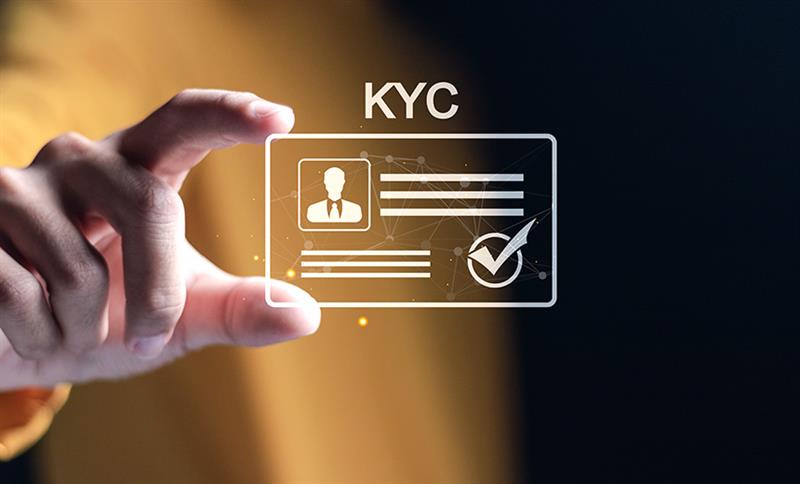
Defining the KYC Zero Model
The term "KYC zero" is frequently misinterpreted as a synonym for "no verification." This distinction is critical for regulatory compliance and legal clarity. A "no KYC" model implies the absence of identity checks, a practice that generally violates anti-money laundering (AML) statutes and financial regulations globally. In contrast, a KYC zero model—more accurately described as zero-knowledge KYC—retains the verification requirement but fundamentally alters how the data is processed and stored.
Zero-knowledge proofs (ZKPs) allow a verifier to confirm the validity of a statement without learning the underlying data. In the context of identity verification, this means a service provider can confirm a user meets specific criteria—such as being over 18, holding valid citizenship, or passing a sanctions screening—without ever receiving or storing the user's passport, selfie, or government ID. The verifier receives a cryptographic proof of compliance, not the personal identity data itself.
This architectural shift removes the incentive for data hoarding. Traditional KYC processes require companies to collect, store, and secure sensitive personally identifiable information (PII), creating large honeypots for cybercriminals. Under a zero-knowledge framework, the identity provider performs the check and issues a token attesting to the user's eligibility. The relying party verifies the token's validity without ever possessing the underlying biometric or document data.
The result is a system that satisfies regulatory obligations for identity assurance while eliminating the privacy risks associated with centralized data storage. Users retain sovereignty over their identity, and service providers reduce their liability exposure by not holding sensitive information they do not need to function.
How zero-knowledge proofs work in practice
Zero-Knowledge Proof (ZKP) technology allows a user to prove they possess a specific credential without revealing the underlying data. In the context of KYC, this means a verifier can confirm a user is over 18 or resides in a specific jurisdiction without ever seeing their date of birth or home address. The system relies on cryptographic algorithms that generate a proof valid only if the underlying statement is true.
The process begins when a user holds a verifiable credential issued by a trusted authority, such as a government or licensed identity provider. Instead of uploading the credential itself, the user’s software generates a zero-knowledge proof locally. This proof is a cryptographic assertion stating, "I have been verified by a trusted authority and meet these specific criteria," without exposing the raw personal data.
This mechanism ensures that compliance requirements are met while maintaining user privacy. The verifier receives only the proof and the public parameters of the system. If the proof is valid, the verifier accepts the claim as fact. This approach prevents the centralization of sensitive data, as the user never transmits their actual identity documents to the service provider.
The technical flow involves three main steps: credential issuance, local proof generation, and on-chain or server-side verification. This structure supports regulatory compliance in decentralized finance (DeFi) and other high-stakes environments where data minimization is a legal requirement. By separating the proof of eligibility from the identity itself, ZK-KYC offers a robust framework for privacy-preserving compliance.
Biometric self-sovereign identity explained
Biometric self-sovereign identity shifts the processing of sensitive verification data from centralized servers to the user’s local device. Instead of uploading raw fingerprints, facial scans, or iris data to a third-party vendor, the biometric input is processed on-device. This approach ensures that the service provider never sees the raw biometric, preserving user control while still generating a cryptographic credential that proves identity without exposing personal data.
This architecture relies on zero-knowledge proof (ZK) technology to maintain regulatory compliance without creating a data honeypot. As noted in industry analyses, applying cryptographic rigour to the compliance layer allows platforms to verify users without storing personal data [[src-serp-8]]. The device generates a signed assertion confirming the biometric match, which is then transmitted to the verifier. The verifier checks the cryptographic signature against a trusted root, confirming the user’s eligibility without ever accessing the underlying biometric template.
By keeping raw biometrics local, organizations mitigate the risk of large-scale identity theft. This model supports strict regulatory requirements for identity verification while adhering to the principle of data minimization. The credential acts as a portable, verifiable token of trust, decoupling the act of verification from the storage of sensitive biological data.
Traditional KYC vs. KYC Zero
The transition from legacy identity verification to zero-knowledge protocols represents a structural shift in data governance. Traditional KYC relies on the collection, storage, and processing of personally identifiable information (PII) by the onboarding entity. This creates a centralized repository of sensitive data that serves as a primary target for attackers.
In contrast, KYC Zero applies cryptographic proofs to verify compliance without exposing the underlying data. As noted in analysis of zero-knowledge infrastructure for regulated finance, this approach applies the same cryptographic rigor found in the asset layer to the compliance layer itself [src-serp-8]. The result is a system where verification occurs without the creation of a data honeypot.
The following comparison outlines the operational differences between these two paradigms regarding data handling, security posture, and user experience.
| Metric | Traditional KYC | KYC Zero |
|---|---|---|
| Data Storage | Centralized PII database | Decentralized cryptographic proofs |
| Security Risk | High (single point of failure) | Low (no PII stored) |
| User Experience | Lengthy form entry & document upload | Instant verification via proof |
| Compliance Scope | Entity-specific data silos | Reusable, privacy-preserving proofs |
Regulatory Compliance and Future Outlook
Zero-knowledge KYC (ZK-KYC) resolves the tension between strict regulatory mandates and user privacy. By allowing users to prove compliance without revealing underlying data, ZK-KYC satisfies Anti-Money Laundering (AML) and Know Your Customer (KYC) requirements while adhering to data minimization principles mandated by GDPR and eIDAS.
This approach distinguishes itself from "no KYC" systems. Traditional KYC requires storing sensitive personal information, creating a high-value target for breaches. ZK-KYC shifts the model: the verifier checks a cryptographic proof of eligibility (e.g., age, jurisdiction, sanctions status) rather than accessing the raw identity document. This ensures that only the minimum necessary data is processed, reducing liability and aligning with the legal requirement to limit data retention.
As regulatory frameworks evolve, institutions are increasingly looking for technical solutions that offer verifiable compliance without the storage risks of centralized databases. The architecture allows for continuous verification without repeated data submissions, streamlining the onboarding process for regulated financial activities.
No comments yet. Be the first to share your thoughts!