
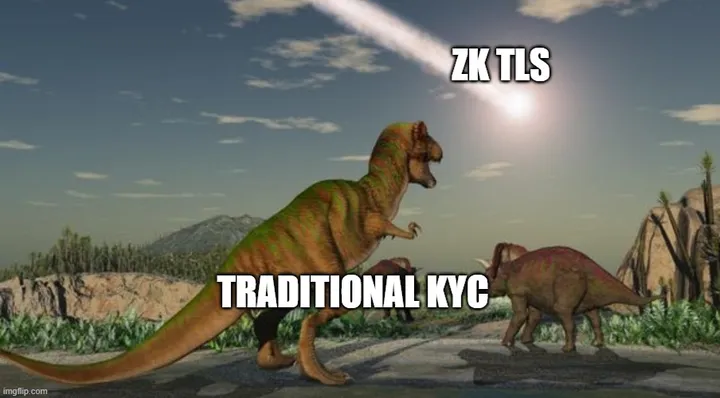
Zero-knowledge kyc limits to account for
Zero-knowledge KYC (ZK-KYC) is a privacy-preserving verification method. It allows a user to prove they meet specific regulatory criteria—such as being over 18 or residing in the EU—to a verifier without revealing underlying personal data. This approach shifts the burden of trust from data storage to cryptographic proof.
In practice, ZK-KYC uses zero-knowledge cryptography to validate statements without exposing the source document. For example, a user can generate a proof that confirms their identity is valid without sharing their actual passport number or face scan. This satisfies Know Your Customer (KYC) obligations while preserving user privacy, a concept detailed in developer documentation for networks like Galactica.
The main purpose of zero-knowledge proof in this context is to allow one party to prove they know something without sharing the data itself. This enhances privacy and security by validating transactions or access requests without revealing sensitive information. As noted by NTT Data, this technology brings trustworthiness to privacy in Web3, aiming to create a secure society where high privacy levels are required.
A common conceptual example involves a cave with two pathways locked by a passphrase. Alice wants to prove to Bob she knows the code without revealing it. Similarly, in ZK-KYC, the "cave" is the verification process, and the "passcode" is the user's identity data. The verifier receives only the proof of entry, not the data itself.
Is zero-knowledge proof legit?
Zero-knowledge proofs are mathematically sound and widely accepted in cryptography. They are not just theoretical; they are implemented in major blockchain protocols and identity systems. The legitimacy comes from the fact that the proof is computationally infeasible to forge without knowing the secret.
However, the implementation matters. While the math is solid, the security of a ZK-KYC system depends on the correct implementation of the cryptographic protocols and the trustworthiness of the initial identity oracle. If the initial identity verification is compromised, the zero-knowledge proof only proves a compromised identity. Therefore, users and providers must ensure the underlying infrastructure is robust and audited.
What is an example of zero-knowledge?
Beyond the cave analogy, a practical example is age verification. Instead of submitting a driver's license to a website to prove you are over 21, you use a ZK-KYC system. The system verifies your license against a trusted authority and generates a proof that you are over 21. The website receives only the proof, not your name, address, or license number.
This ensures that the service provider cannot misuse your data, while still complying with age-restricted regulations. This is a core application of ZK-KYC, as described by Zyphe, where the verifier confirms a statement about a customer is true without ever seeing the personal data.
Zero-knowledge kyc choices that change the plan
Use this section to make the The Rise of Zero-Knowledge KYC decision easier to compare in real life, not just on paper. Start with the reader's actual constraint, then separate must-have requirements from details that are merely nice to have. A practical choice should survive normal use, maintenance, timing, and budget. If a recommendation only works in an ideal situation, call that out plainly and give the reader a fallback path.
How to Choose a Zero-Knowledge KYC Provider
Selecting a zero-knowledge KYC provider requires balancing regulatory compliance with user privacy. Unlike traditional identity verification, which stores raw personal data, zero-knowledge systems allow users to prove they meet specific criteria—such as being over 18 or residing in the EU—without revealing the underlying information. This distinction is critical for organizations handling sensitive biometric or financial data in 2026.
The decision framework below outlines the five essential steps for evaluating vendors. Focus on cryptographic standards, regulatory alignment, and integration complexity rather than marketing claims.
Ensure the provider uses industry-standard zero-knowledge proofs (ZKPs), such as zk-SNARKs or zk-STARKs. These protocols allow verification without data exposure. Check if the vendor’s whitepaper details the specific cryptographic primitives used and whether they have undergone independent security audits. Avoid providers using proprietary or undocumented encryption methods.
Confirm that the solution complies with relevant regulations in your jurisdiction, such as GDPR in Europe or state-level privacy laws in the US. The provider should explicitly state how they handle data minimization and user consent. A compliant system ensures that while the verifier confirms a claim, no unnecessary personal data is retained or processed.
Evaluate the ease of integrating the ZK-KYC protocol into your existing identity infrastructure. Look for comprehensive SDKs, APIs, and documentation that support your tech stack. Providers that offer modular components allow you to integrate only the specific verification steps you need, reducing development time and maintenance overhead.
Zero-knowledge KYC should feel seamless to the end user. The verification process should be fast, typically taking only a few seconds, and require minimal friction. Test the provider’s demo or sandbox to ensure the user interface clearly explains the privacy benefits and guides users through the proof generation process without confusion.
Understand exactly what data, if any, is stored by the provider. True zero-knowledge systems should not store raw biometric data or personal identifiers. Review the vendor’s privacy policy to ensure they do not retain logs of verification attempts or user attributes. This transparency is essential for maintaining trust and complying with data protection laws.
Spotting weak zero-knowledge KYC claims
Zero-knowledge KYC promises privacy without sacrificing compliance, but the market is crowded with vague marketing that obscures technical reality. When evaluating vendors in 2026, look for concrete proof of their cryptographic claims rather than accepting buzzwords. Weak options often fail to specify which zero-knowledge proof system they use, such as zk-SNARKs or STARKs, leaving users unsure of the trust assumptions involved.
A common mistake is assuming that "zero-knowledge" automatically means full anonymity. In regulated environments, the verifier still needs to know who is verifying the proof to maintain audit trails. Vendors that claim complete anonymity while meeting strict KYC obligations are likely misleading you. Legitimate solutions, like those documented by Galactica, focus on proving specific attributes (e.g., age or residency) without revealing the underlying data, not hiding the user's identity entirely.
Another red flag is the lack of clear integration paths for existing identity providers. If a solution cannot seamlessly work with established biometric or AI-driven identity checks, it creates friction that defeats the purpose of streamlined verification. Always check if the vendor provides a testnet or sandbox environment where you can verify the proof generation and verification process yourself before committing to a production deployment.
No comments yet. Be the first to share your thoughts!