
Defining KYC Zero in 2026
The term "KYC Zero" is frequently mischaracterized as a mechanism for regulatory evasion. This interpretation is legally imprecise and obscures the actual utility of zero-knowledge proofs (ZKPs) in financial compliance. KYC Zero does not mean the absence of checks; it means the absence of data hoarding. It is a structural shift from verifying identity through document submission to verifying identity through cryptographic proof.
Traditional Know Your Customer protocols require institutions to collect, store, and secure personally identifiable information (PII) such as government IDs and proof of address. This creates a centralized data honeypot that attracts regulatory scrutiny and cyber risk. Zero-knowledge compliance inverts this model. The user generates a cryptographic proof that they satisfy a specific condition—such as being over eighteen, holding a valid passport, or not appearing on a sanctions list—without exposing the raw identity data.
This distinction is critical for 2026 compliance frameworks. The goal is not to bypass AML laws but to satisfy them with minimal data exposure. As noted in industry analyses, this approach applies the same cryptographic rigor used in the asset layer to the compliance layer itself, reducing liability for both the platform and the user. The result is a system where regulators can audit the validity of the proof without ever accessing the private identity data.
How Zero-Knowledge Proofs Work for Identity
Zero-knowledge proofs (ZKPs) apply cryptographic rigor to the compliance layer, mirroring the security standards already established in the asset layer. This mechanism allows a platform to verify that a user meets specific regulatory criteria without ever accessing the underlying personal data. The result is a system where compliance is mathematically enforced rather than operationally managed through data hoarding.
The process begins when the user generates a proof on their own device. This proof is a cryptographic artifact that confirms a statement is true—for example, that the user is over 18 or not on a sanctions list—without revealing the actual birth date or identity documents. As noted by Zyphe, this allows one party to convince another of a fact without revealing the underlying information. The proof is then sent to the verifier, which checks it against public rules. If the proof is valid, access is granted. The sensitive data never leaves the user’s device, eliminating the risk of a central data breach.
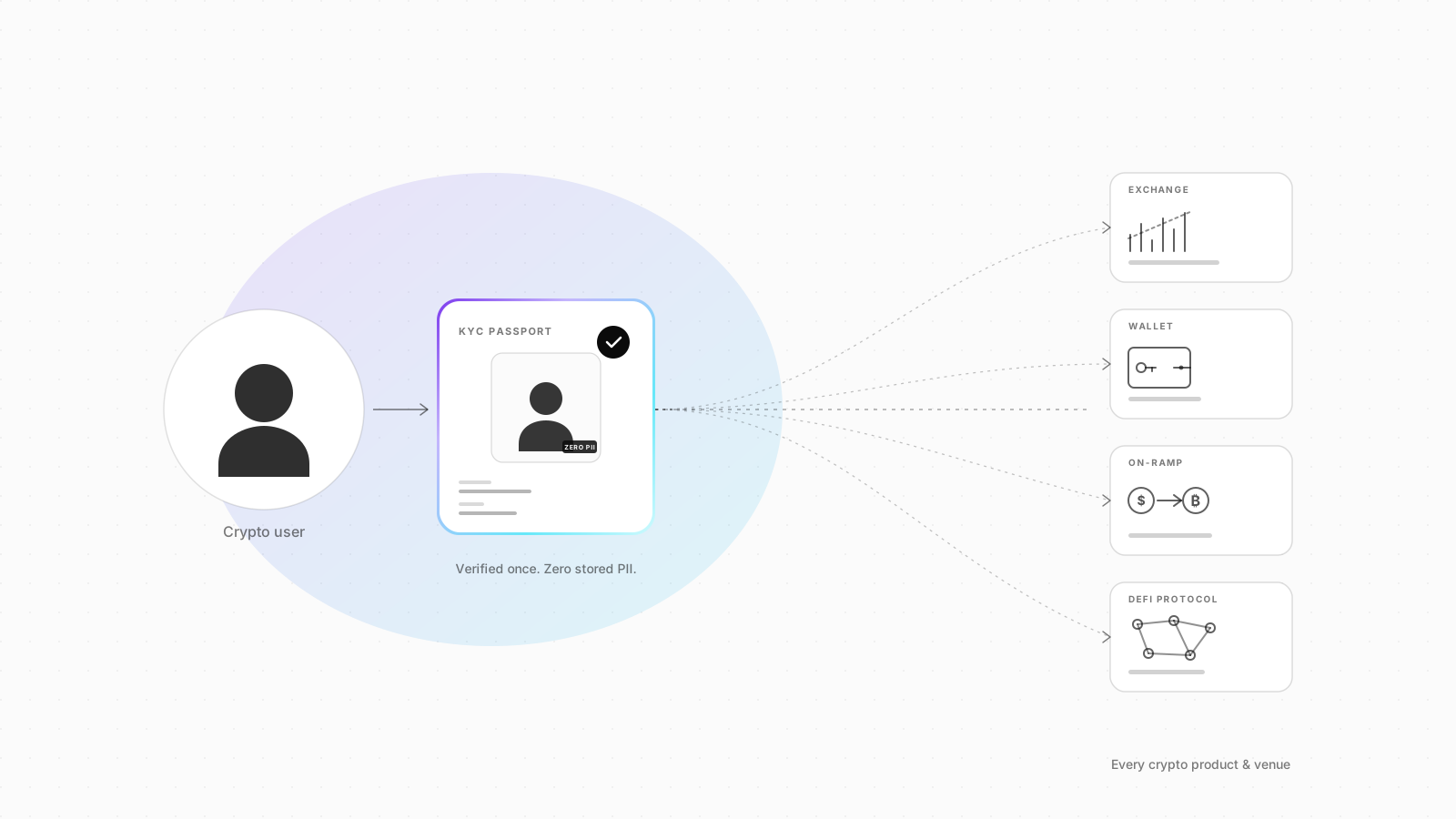
This distinction is critical for legal compliance. Privacy-preserving KYC is not about evading regulation; it is about fulfilling it with minimal data exposure. Traditional KYC models require platforms to store vast amounts of personally identifiable information (PII), creating a "data honeypot" that attracts hackers and invites regulatory scrutiny. ZKPs remove this liability. The platform verifies the fact of compliance, not the identity of the user. This shift reduces the legal risk associated with data retention while maintaining the integrity of the regulatory framework. As Finextra argues, this approach applies the same cryptographic rigor to compliance as is used for asset security, ensuring that verification is robust without being invasive.
The 2026 Regulatory Landscape for ZK-KYC
The regulatory framework for digital assets in 2026 is defined by a critical distinction: privacy-preserving verification versus unregulated anonymity. Regulators are no longer treating all cryptographic privacy tools as threats to compliance. Instead, they are adapting existing legal structures to recognize Zero-Knowledge Proofs (ZKPs) as a valid, auditable alternative to traditional, centralized database storage. This shift moves the industry away from the binary of "fully transparent" versus "no-KYC" toward a model of cryptographic compliance.
In the European Union, the implementation of eIDAS 2 and the Markets in Crypto-Assets (MiCA) regulation provides the first comprehensive legal pathway for ZK-KYC. These frameworks do not mandate that identity data be stored in plaintext on a central server. Instead, they require that identity verification be verifiable by the issuer and the regulator. ZKPs allow a user to prove they meet specific criteria—such as being over 18, not residing in a sanctioned jurisdiction, or holding a valid digital identity credential—without revealing the underlying personal data. This aligns with the EU’s strict data minimization principles under the General Data Protection Regulation (GDPR), reducing liability for data breaches while satisfying anti-money laundering obligations.
Similarly, the United States is navigating this transition through the Financial Crimes Enforcement Network (FinCEN) and the proposed Anti-Money Laundering Act (AMLA). The focus remains on the "travel rule" and beneficial ownership transparency. Regulators are increasingly accepting cryptographic proofs as evidence of compliance, provided the underlying protocol allows for lawful access when necessary. This does not mean "no-KYC" in the sense of unverified trading; rather, it means the verification happens off-chain or via zero-knowledge circuits, keeping the on-chain ledger clean of sensitive PII (Personally Identifiable Information). The goal is to prevent illicit finance without creating honeypots of sensitive customer data.
It is vital to distinguish this evolving landscape from "no-KYC" exchanges that operate without any identity checks. Those platforms remain high-risk and often non-compliant with global AML standards. ZK-KYC, by contrast, is a compliance mechanism. It allows institutions to verify identity cryptographically, ensuring that only verified users can interact with regulated financial services. This approach reduces operational risk, minimizes regulatory exposure, and protects user privacy simultaneously. As regulators refine their technical standards, ZKPs are becoming the infrastructure for trusted, privacy-first financial interactions.
Traditional KYC vs. KYC Zero Models
Regulatory frameworks currently demand identity verification, but the method of execution defines the risk profile. Traditional Know Your Customer (KYC) protocols require platforms to collect, store, and verify personally identifiable information (PII). This creates a centralized repository of sensitive data—a "data honeypot" that attracts cybercriminals and invites regulatory scrutiny. When a breach occurs, the exposure is total: names, addresses, and government IDs are compromised simultaneously.
KYC Zero models, powered by zero-knowledge proofs (ZKPs), fundamentally alter this dynamic. As noted by industry analyses, ZKPs allow a prover to convince a verifier that a statement is true without revealing the underlying data. In practice, a user can prove they are over 18, a resident of a specific jurisdiction, or not on a sanctions list without ever transmitting their birthdate, passport number, or home address to the platform. The compliance layer applies the same cryptographic rigour as the asset layer, ensuring verification without custody of identity.
The distinction between evading KYC and privacy-preserving KYC is critical. No-KYC exchanges often operate in legal gray areas, lacking robust anti-money laundering controls. In contrast, KYC Zero is fully compliant; it satisfies the legal requirement to verify identity while minimizing the data footprint. This approach reduces liability for platforms and protects user privacy, shifting the security paradigm from data storage to cryptographic proof.
| Feature | Traditional KYC | KYC Zero (ZKP) | Breach Impact |
|---|---|---|---|
| Data Storage | Centralized PII database | Zero PII stored | High |
| Verification Method | Document upload & manual review | Cryptographic proof generation | Low |
| Breach Exposure | Full identity theft possible | No usable data exposed | Minimal |
| Regulatory Status | Standard compliance | Compliant via proof | Low |
Real-World Compliance Use Cases
The shift toward zero-knowledge proofs in financial compliance is moving from theoretical research to active deployment in high-stakes environments. The primary application involves decentralized exchanges (DEXs) and DeFi protocols seeking to satisfy regulatory scrutiny without compromising user privacy. Rather than eliminating identity verification, these systems use ZK-KYC to prove compliance status—such as being a non-sanctioned entity or meeting age requirements—without revealing the underlying personal data on-chain. This distinction is critical: it is not about evading KYC, but about preserving data minimization while maintaining legal adherence.
Regulated fiat on-ramps are also integrating these protocols to reduce liability. By using zero-knowledge proofs, financial institutions can verify that a transaction complies with Anti-Money Laundering (AML) rules without storing sensitive identity documents in centralized databases vulnerable to breaches. This approach aligns with the emerging regulatory expectation that financial intermediaries must protect customer data while ensuring transparency for authorities. The result is a compliance framework that is both robust and privacy-preserving, reducing the risk of data leaks and regulatory penalties.
As adoption grows, the focus remains on precise implementation. Projects must ensure their ZK-KYC systems are audited and recognized by regulatory bodies to be effective. The goal is not to create a parallel, unregulated financial system, but to enhance the integrity and privacy of existing regulated markets. This careful balance between transparency and privacy is defining the next phase of crypto compliance.
Frequently Asked Questions About KYC Zero
The term "KYC" is often misunderstood in public discourse, leading to confusion between illicit evasion and compliant privacy. It is essential to distinguish between platforms that simply ignore regulations and those that use cryptographic proof to satisfy them.
What is a no KYC exchange?
A "no KYC" exchange is a platform that allows users to trade cryptocurrency without submitting government-issued identification or proof of address. Historically, these platforms operated with minimal oversight, which often resulted in higher risks of fraud, limited regulatory protection, and potential trading restrictions. In 2026, the landscape has shifted; truly "no-KYC" services on regulated fiat gateways are rare, as most jurisdictions now mandate some level of identity verification for fiat on-ramps.
What does "KYC-free" mean?
"KYC-free" typically refers to services that do not require identity verification for specific, low-value transactions or private peer-to-peer interactions. However, this term is frequently misused to describe services that are entirely unregulated. In a compliance context, "KYC-free" should not be interpreted as a license to evade legal obligations. Instead, it often denotes a lighter verification tier for small transactions, where the risk profile is deemed manageable under existing regulatory frameworks.
Is KYC Zero legal?
Yes, KYC Zero is legal when implemented correctly. Unlike "no-KYC" services that bypass regulations, KYC Zero uses zero-knowledge proofs to verify compliance without exposing sensitive personal data. This approach satisfies regulatory requirements for Anti-Money Laundering (AML) and Know Your Customer (KYC) checks while preserving user privacy. The legality hinges on the fact that the entity still verifies the user's status (e.g., age, jurisdiction, sanctions list) but does so cryptographically rather than through traditional document submission.
No comments yet. Be the first to share your thoughts!