
What is KYC Zero?
KYC Zero describes a technological shift in identity verification that relies on zero-knowledge proofs (ZKPs) to confirm regulatory predicates without exposing raw personal data. This approach distinguishes itself from "no-KYC" services, which often bypass compliance entirely. Instead, KYC Zero enables institutions to verify specific claims—such as age, residency, or sanction list status—while keeping the underlying identity data private.
The core mechanism allows a verifier to confirm a statement is true without seeing the evidence. For example, a regulated business can confirm a user is over 18 and resides in the EU without ever storing their passport number or home address. This eliminates the need for customers to share sensitive personally identifiable information (PII) with every entity they interact with, reducing the attack surface for data breaches.
This model aligns with emerging regulatory frameworks that prioritize data minimization. By decoupling the verification of legal requirements from the storage of personal records, KYC Zero offers a path to compliance that respects privacy rights while satisfying anti-money laundering (AML) obligations.
The concept is rooted in cryptographic research, such as the zkKYC framework, which proposes removing the need for customers to share personal information with regulated businesses for KYC purposes. This shift moves the industry away from centralized data hoarding toward decentralized, privacy-preserving verification.
How Zero-Knowledge Proofs Work in Onboarding
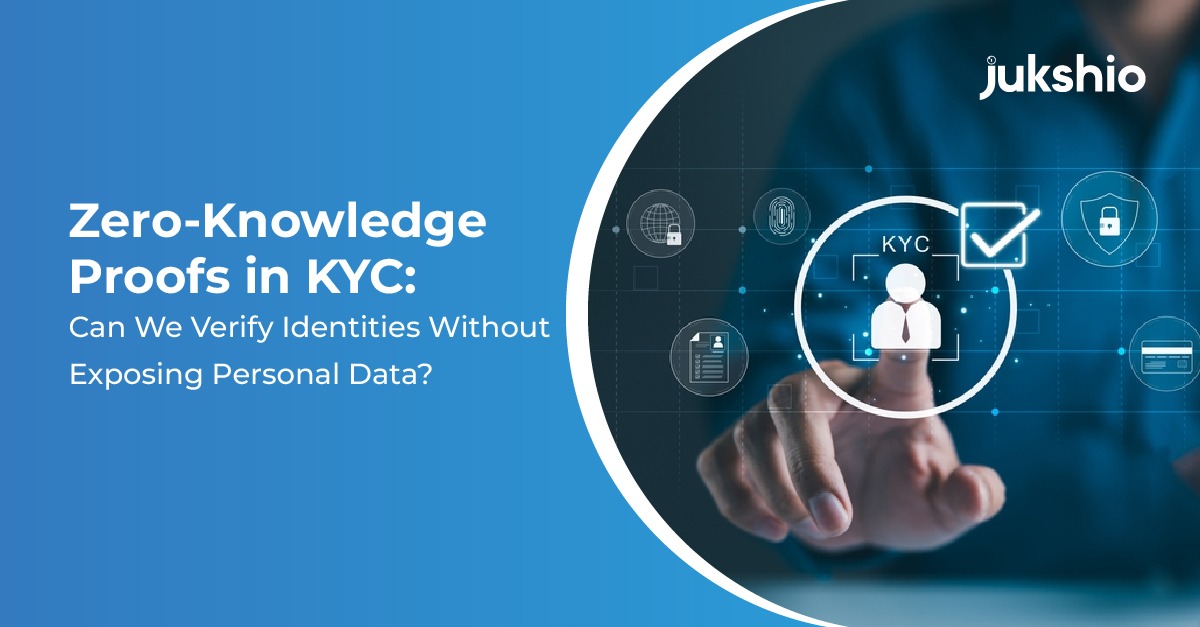
Zero-Knowledge Proof (ZKP) KYC transforms identity verification by allowing a user to prove they meet specific criteria without revealing the underlying data. In a traditional KYC flow, a financial institution receives a user's passport, date of birth, and address, creating a centralized data honeypot vulnerable to breaches. Under the KYC Zero model, the user’s identity data remains encrypted on their device. The system generates a cryptographic proof that asserts, for example, that the user is over 18 and resides in a compliant jurisdiction, without exposing the actual birthdate or location.
This process relies on a prover-verifier interaction. The prover (the user) uses AI-driven systems to parse complex identity predicates from their encrypted documents. These systems validate that the data is authentic and consistent before generating the proof. The verifier (the compliance platform) then checks the proof against public parameters. If the proof is valid, the verifier accepts the user as compliant. This ensures that the institution never holds the sensitive personal information, significantly reducing liability and regulatory risk.
The technical mechanism involves several steps. First, the user’s AI agent extracts and encrypts identity attributes. Second, the agent generates a zero-knowledge proof that satisfies the required compliance predicates. Third, the proof is submitted to the verifier. Finally, the verifier confirms the proof’s validity and grants access. This workflow ensures that privacy and compliance are not mutually exclusive but are instead integrated into the verification process.
The user’s AI agent scans identity documents, extracting key attributes like age and residency. This data is immediately encrypted locally, ensuring that no sensitive information leaves the user’s device in plaintext. The agent validates the document’s authenticity before proceeding.
The encrypted data is used to generate specific compliance predicates. For instance, the system proves that the user is over 18 without revealing their exact birthdate. This step involves complex cryptographic operations that ensure the proof is mathematically sound and cannot be forged.
The generated proof is submitted to the verifier. The verifier checks the proof against public parameters to ensure it is valid. If the proof is accepted, the user is granted access to the service. The verifier never sees the underlying data, maintaining the user’s privacy.
2026 Regulatory Convergence Forces a New Standard
The compliance landscape in 2026 is defined by the collision of stringent new mandates and cryptographic innovation. Frameworks like the EU’s eIDAS 2.0 and the US Anti-Money Laundering Act (AMLA) have shifted the regulatory burden from simple data collection to verifiable proof. This convergence eliminates the viability of centralized data hoarding, forcing institutions to adopt KYC Zero architectures that prioritize privacy-preserving verification.
Regulators now demand granular auditability without exposing raw personally identifiable information (PII). The old model of storing passports and utility bills in centralized databases creates a single point of failure that regulators increasingly view as a systemic risk. Instead, the new standard requires systems that can prove compliance status—such as age verification or sanctions screening—without revealing the underlying identity data.
This shift is not merely technical but structural. Financial institutions are moving toward zero-knowledge proof (ZK-KYC) systems, where cryptographic proofs validate compliance criteria on-chain or within private ledgers. As noted by industry analysts, this approach applies the same rigor to the compliance layer as the asset layer, ensuring that no data-honeypot exists for malicious actors to exploit.
The result is a more resilient compliance infrastructure. By verifying claims rather than storing identities, organizations reduce liability and align with the privacy-first expectations of modern consumers. This transition marks the end of the era where KYC meant data accumulation, replacing it with a model where compliance is verified, not hoarded.
KYC Zero vs Traditional Verification Models
Use this section to make the KYC Zero decision easier to compare in real life, not just on paper. Start with the reader's actual constraint, then separate must-have requirements from details that are merely nice to have. A practical choice should survive normal use, maintenance, timing, and budget. If a recommendation only works in an ideal situation, call that out plainly and give the reader a fallback path.
| Factor | What to check | Why it matters |
|---|---|---|
| Fit | Match the option to the primary use case. | A good deal still fails if it does not fit the job. |
| Condition | Verify age, wear, and service history. | Hidden condition issues erase upfront savings. |
| Cost | Compare purchase price with likely upkeep. | The cheapest option is not always the lowest-cost option. |
Real-World Applications in Crypto and Banking
The transition to KYC Zero is reshaping how financial institutions handle identity verification. In the crypto sector, exchanges are increasingly adopting zero-knowledge proof (ZKP) protocols. These systems allow users to prove they meet regulatory criteria—such as age or jurisdiction—without revealing their actual identity data. This shift addresses the growing demand for privacy while maintaining compliance with Anti-Money Laundering (AML) standards.
Traditional banking is following suit by integrating decentralized identity solutions. Banks are moving away from centralized databases toward verifiable credentials. This approach reduces the risk of large-scale data breaches and gives customers more control over their personal information. The goal is to create a system where compliance is automated and privacy-preserving.
| Feature | Traditional KYC | KYC Zero Implementation |
|---|---|---|
| Data Storage | Centralized Database | Decentralized / Zero-Knowledge Proofs |
| User Control | Limited | Full Control over Shared Data |
| Compliance | Manual Review | Automated Smart Contract Verification |
The integration of these technologies requires significant technical infrastructure. Institutions must ensure that their systems can verify proofs without storing sensitive personal data. This balance between regulatory requirement and user privacy is the core challenge of the KYC Zero model.
Frequently Asked Questions About KYC Zero
What is a no-KYC exchange?
A no-KYC platform allows users to trade without submitting identity documents or proof of address. While this offers immediate privacy, it often operates in a regulatory gray area, lacking the compliance frameworks required by major financial jurisdictions. This absence of verification can increase exposure to scams and trading limitations, as these platforms do not adhere to standard anti-money laundering (AML) protocols.
How does KYC Zero differ from no-KYC?
KYC Zero is not the absence of compliance, but a shift in how verification is handled. Unlike no-KYC platforms that bypass regulatory checks entirely, KYC Zero utilizes privacy-preserving technologies—such as zero-knowledge proofs—to verify eligibility without exposing personal data. This approach satisfies legal requirements while ensuring that sensitive user information remains confidential and secure.
Is KYC Zero legally compliant?
Yes. KYC Zero is designed to meet regulatory standards by confirming that a user is eligible to transact without storing unnecessary personal records. It aligns with frameworks that prioritize data minimization, ensuring that compliance is achieved through cryptographic verification rather than traditional document collection. This method reduces liability for both the provider and the user.
No comments yet. Be the first to share your thoughts!