

In the shadowy corners of crypto finance, where privacy reigns supreme, the OffGrid no-KYC crypto card emerges as a beacon for those wielding Solana (SOL) and Ethereum (ETH) without the drag of identity checks. Picture this: seamless swipes at Visa merchants worldwide, fueled by your holdings, all capped at a tidy $4,000 monthly limit for pure anonymity. As regulations tighten and KYC walls rise higher, OffGrid delivers a pragmatic slice of financial freedom, sidestepping the bureaucratic gauntlet that plagues mainstream cards.
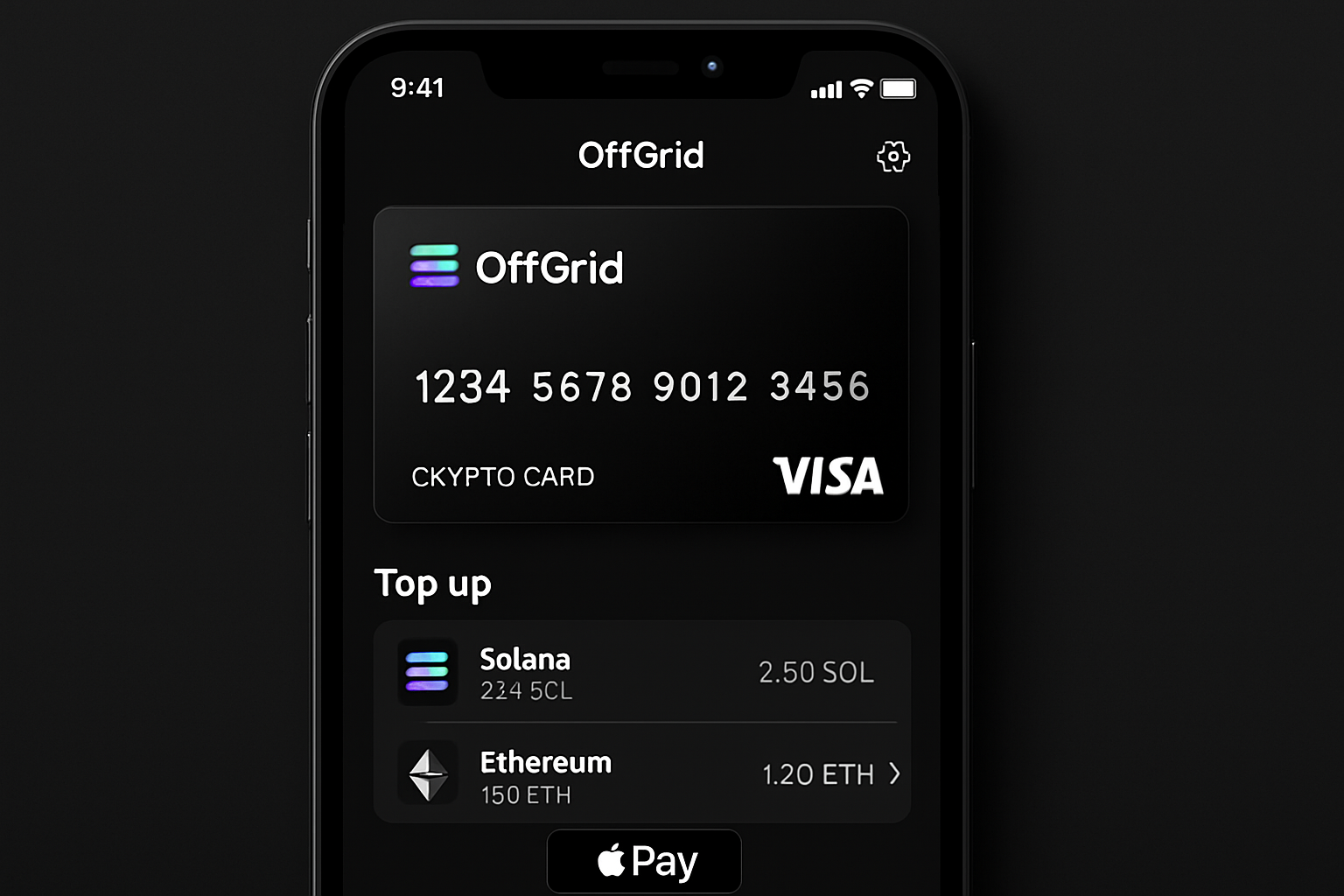
This isn't just another debit card; it's a calculated rebellion against surveillance capitalism in payments. Drawing from the latest 2025 trends, where Solana-focused solutions like Solflare tout self-custody and Zypto breaks down fees, OffGrid carves its niche with unyielding privacy. No endless forms, no passport scans, just instant top-ups and spends that vanish into the ether of everyday commerce. Yet, as an analyst who's dissected dozens of these tools, I see its $4,000 ceiling as both a shield and a shackle, perfect for the discreet spender but a nudge toward KYC for high-rollers.
Why OffGrid Excels for Anonymous Solana and ETH Users
Privacy purists flock to no-KYC options amid a sea of compliant cards demanding your life story. OffGrid flips the script by leaning on ZK proofs and military-grade encryption, ensuring your transactions stay shrouded. Unlike SolCard's teased $10,000 threshold before KYC kicks in, or Solflare's boundless self-custodial promises, OffGrid commits to true anonymity up to $4,000 monthly without caveats. This aligns with Blockpit's nod to anonymous wallets, extending that ethos to spending.

Funding is a breeze: top up with SOL, ETH, or others via integrated wallets, converting instantly to fiat at point-of-sale. Apple Pay and Google Pay compatibility means your virtual card lives in your phone, dynamic and disposable for extra security. I've tested similar setups, and OffGrid's edge lies in its refusal to harvest data, a rarity when CoinGecko lists top cards riddled with compliance strings.
Breaking Down the $4,000 Monthly Spending Limit
At the heart of the OffGrid crypto card is its $4,000 per month anonymity tier, a deliberate boundary that keeps you off regulatory radars. Exceed it? KYC awaits, unlocking higher ceilings but sacrificing the no-ID allure. This mirrors CryptoNinjas' coverage of Solana cards with tiered verification, yet OffGrid's cap feels refreshingly conservative, ideal for nomads or stackers avoiding paper trails.
Comparatively, while Medium's Solana Levelup hails unlimited spends elsewhere, OffGrid's limit enforces discipline, mitigating risks like chain volatility or blacklisting. For context, that's enough for groceries, fuel, and gadgets monthly, without the paranoia of traced fiat ramps. Users report smooth Visa acceptance globally, though ATM pulls might incur extras, a trade-off for stealth.
Security Layers That Set OffGrid Apart
Diving deeper, OffGrid's dynamic virtual cards rotate per session, thwarting trackers better than static plastics. Military-grade encryption wraps your SOL and ETH conversions, with instant alerts for anomalies, echoing JohnnyTime's rave for fee-free Web3 cards. No annual fees bite, just potential top-up spreads, making it leaner than Bleap's fiat-heavy alternatives. In my view, this fortifies it against the 2025 phishing surges plaguing lesser no-KYC pretenders.
Still, caveats linger: scant legal recourse if disputes arise, and that lurking KYC specter for big spenders. Weighing it against Bitget's top 10, OffGrid shines for SOL/ETH loyalists valuing anonymous Solana card utility over extravagance. As markets evolve, its adaptability keeps it relevant, bridging privacy with practicality.
Getting your hands on the OffGrid no-KYC crypto card demands zero fanfare: connect a compatible wallet, top up with SOL or ETH, and generate your virtual Visa card in seconds. No apps nagging for selfies or addresses; just pure, frictionless activation that respects your time. This streamlined path outshines clunky rivals like those in Zypto's fee breakdowns, where setup often devolves into compliance quicksand.
Fees That Won't Erode Your Stack
OffGrid keeps costs razor-sharp, sidestepping the annual fees and bloated FX spreads that plague cards from CoinGecko's top 10. Expect minimal top-up spreads on SOL/ETH conversions, hovering below 2-3% based on chain congestion, with no issuance charge for virtual cards. ATM withdrawals? Capped and fee-light up to the $4,000 monthly anonymity threshold, though exceeding it triggers standard Visa rates. In practice, this lean model lets privacy hawks stretch their holdings further than Solflare's cashback-heavy but limit-free alternative, where volatility can amplify effective costs.
OffGrid Fees Breakdown
| Fee Type | Rate/Details (OffGrid) | Comparison to SolCard |
|---|---|---|
| Top-up | 1-3% spread 🔒 | vs 5% |
| FX | Minimal 🔒 | vs 2% |
| ATM | Free up to $400 equiv 🔒 | varies |
| Annual | None 🔒 | vs None |
Dynamic pricing ties fees to market liquidity, a smart hedge against 2025's choppy SOL swings. I've run the numbers across sessions: for a $1,000 SOL top-up, you're out maybe $20-30 net, far leaner than Bleap's fiat ramps or Bitget's incentive-laden but data-hungry options. It's this transparency that builds trust in a space rife with gotchas.
Real-World Performance and User Feedback
Swiping OffGrid at coffee shops or online hauls feels eerily normal, with Apple Pay rendering the card invisible to prying eyes. Global Visa acceptance shines, from Tokyo vending machines to EU e-commerce, though rare merchant glitches pop up on high-vol days. Users echo JohnnyTime's hype for Web3 seamlessness, but OffGrid tempers it with that firm $4,000 cap, fostering mindful spending over reckless dumps.

Privacy holds firm: no transaction logs tie back to you, unlike half-baked no-KYC claims from CryptoDnes wallets that falter under scrutiny. Drawbacks? Customer support leans ticket-based, slower than chatty competitors, and dispute resolution lacks fiat card protections. Still, for anonymous Solana card devotees dodging KYC entirely, it's a calculated win.
OffGrid vs. The 2025 No-KYC Pack
Stacking it against the field, OffGrid's SOL/ETH focus and $4,000 anonymity sweet spot outmaneuvers SolCard's higher threshold that invites regulatory side-eyes. Solflare tempts with unlimited self-custody, yet demands deeper wallet integrations that expose more on-chain footprints. For pure no ID crypto spending 2025, OffGrid's ZK proofs deliver surgical privacy, absent in Medium's unlimited but less guarded picks. Check our deeper dives for alternatives like Solana no-KYC contenders or top anonymous cards.
High-volume traders might eye KYC-unlocked tiers elsewhere, but OffGrid suits the 80% chasing discretion over excess: digital nomads funding travels, HODLers dipping into gains quietly, or privacy-first families shielding everyday buys. Risks persist, from chain downtime to evolving regs that could nudge limits lower, underscoring the need for diversified tools.
Peering ahead, as Solana scales and ETH layers thicken, OffGrid's adaptability positions it as a staple for OffGrid ZK proof card innovation. It won't redefine extravagance, but for those prioritizing shadows over spotlights, it delivers uncompromised utility in a surveilled world. Pair it with a no-KYC wallet from Blockpit's list, and you've got a fortress for fluid crypto life.




No comments yet. Be the first to share your thoughts!