
What Is the KYC Zero Constraint?
The "KYC Zero" constraint describes the friction users feel when forced to choose between regulatory compliance and personal privacy. Traditional Know Your Customer (KYC) processes require sharing sensitive personal data—passports, selfies, and address proofs—with centralized entities that often lack robust security. This creates a vulnerability where a single data breach can expose a user's entire identity footprint.
Decentralized Identity (DID) and Self-Sovereign Identity (SSI) aim to resolve this by shifting control back to the user. Instead of handing over copies of documents, users store credentials in a digital wallet and share only the specific data points required for verification. This approach aligns with the "zero-knowledge" principle, where a verifier can confirm a claim (e.g., "over 21") without seeing the underlying data (e.g., birth date).
The constraint is not just technical but legal. Regulations like the EU's MiCA and the US FinCEN guidance require exchanges and platforms to verify user identities. The challenge for 2026 is implementing these checks without the traditional data hoarding. Successful solutions use Zero-Knowledge Proofs (ZKPs) to generate cryptographic evidence that satisfies compliance officers while keeping the actual personal data private. This allows platforms to remain compliant with anti-money laundering (AML) laws while respecting user privacy expectations.
Kyc zero choices that change the plan
Adopting a zero-KYC or decentralized identity model removes the friction of traditional verification, but it introduces distinct operational and regulatory risks. The choice between anonymous access and self-sovereign identity (SSI) depends on which liabilities your specific use case can absorb. Below is a comparison of the primary tradeoffs across compliance, security, and usability.
| Factor | Anonymous Access | Self-Sovereign Identity | Risk Profile |
|---|---|---|---|
| Regulatory compliance | High risk. Often flagged by AML systems for lack of audit trail. | Low risk. Proves eligibility without exposing raw PII, satisfying most regulators. | High |
| Data privacy | Maximum. No identity data is stored or linked to transactions. | High. Cryptographic proofs verify attributes (e.g., age, residency) without revealing identity. | Low |
| Fraud susceptibility | High. Easier for bad actors to create multiple fraudulent accounts (Sybil attacks). | Medium. Requires robust key management; lost keys mean lost access, but identity is unique. | Medium |
| User experience | Best. Instant onboarding with no document uploads or waiting periods. | Good. Requires wallet setup and credential management, which adds initial friction. | Low |
| Institutional adoption | Poor. Banks and regulated exchanges rarely support fully anonymous accounts. | Growing. Increasingly accepted as a standard for compliant digital identity. | Medium |
The most significant tradeoff lies between absolute privacy and institutional acceptance. Anonymous systems, often found in no-KYC directories, offer the fastest entry but face increasing scrutiny from financial regulators. In contrast, SSI solutions like those built on zero-knowledge proofs (ZKPs) allow users to prove they meet criteria—such as being over 18 or a resident of a specific jurisdiction—without revealing their actual identity.
Security also shifts from institutional custody to personal responsibility. In a zero-KYC model, you control your keys entirely, meaning there is no customer support to recover lost assets. With SSI, while you still hold your credentials, the structured nature of verifiable credentials can sometimes integrate with recovery mechanisms or social recovery wallets, offering a middle ground between anonymity and support.
When evaluating these options, consider the volume and type of transactions. Low-volume personal use may tolerate the higher fraud risk of anonymous access, but high-volume or business-critical operations typically require the auditability of SSI to avoid account freezes or legal action. Always verify the current regulatory stance in your jurisdiction before committing to a zero-KYC infrastructure.
How to Build a KYC Zero Workflow
Choosing a decentralized identity (DID) infrastructure requires balancing regulatory scrutiny with user friction. The goal is to create a "KYC Zero" paradigm where compliance is verified without storing sensitive personal data on public ledgers. This framework outlines the technical steps to implement a privacy-preserving verification system using zero-knowledge proofs (ZKP) and self-sovereign identity.
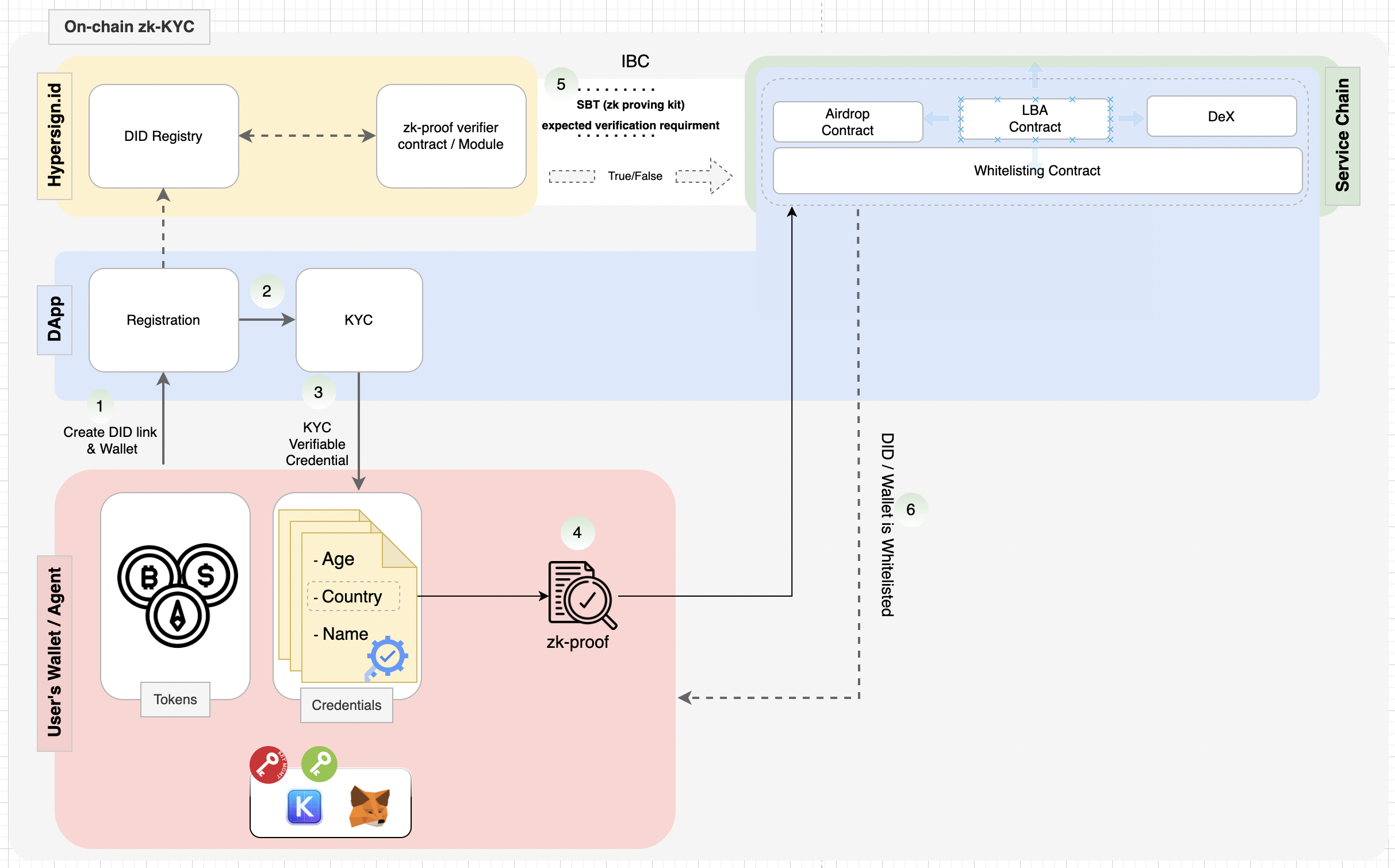
Determine exactly which attributes a regulator or partner needs to verify. In a ZK-KYC model, you do not prove identity; you prove a statement about identity, such as "the user is over 18" or "the user is a US resident." Defining this boundary early prevents unnecessary data collection and reduces liability. Narrower claims mean smaller proof sizes and faster verification times.
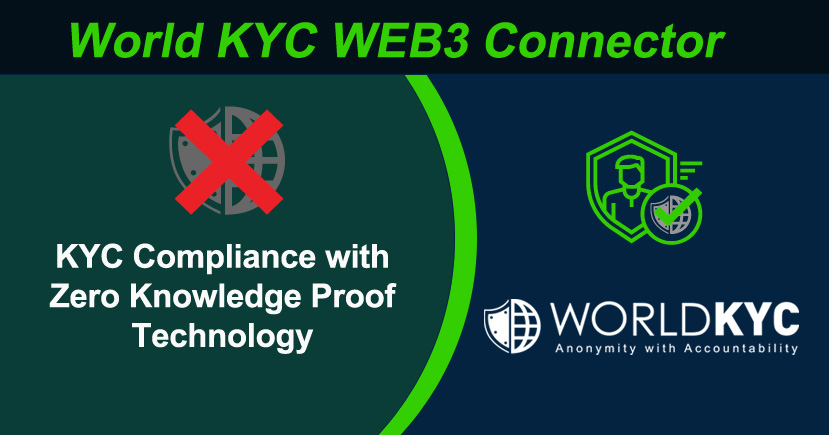
Choose a decentralized identifier standard that supports verifiable credentials (VCs). W3C VC Data Model is the current industry baseline. You must also establish a trusted issuer—often a regulated entity or a decentralized identity provider—who will sign the credentials. The issuer’s reputation directly impacts the trustworthiness of the zero-knowledge proofs generated later.
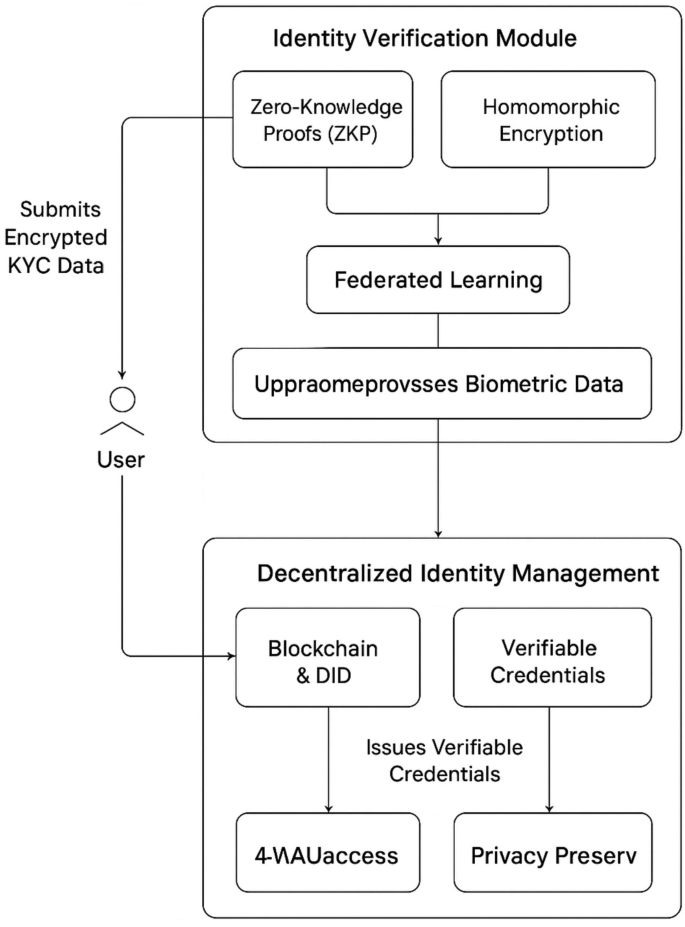
Develop or integrate a zero-knowledge circuit that takes the user’s signed credential as input and outputs a valid proof. This circuit contains the logic for your verification boundary (e.g., age checks). The user generates this proof locally on their device. This step ensures that the verifier never sees the underlying credential, only the mathematical proof that the conditions were met.

Deploy a verifier contract that accepts the ZK proof and the public parameters of the circuit. The contract checks the proof’s validity against the issuer’s public key. If the proof is valid, the contract grants access or mints a non-transferable NFT (Soulbound Token) as a proof of compliance. This on-chain record is immutable but reveals no personal data.
Conduct a formal audit of the circuit logic and the verifier contract. Ensure that the zero-knowledge proof does not leak side-channel information. Verify that the system meets specific regulatory requirements, such as AML (Anti-Money Laundering) and GDPR (General Data Protection Regulation) right-to-be-forgotten clauses, which may require off-chain revocation lists or selective disclosure mechanisms.
This workflow shifts compliance from a data-hoarding model to a proof-based model. By leveraging DID and ZKP, organizations can reduce the attack surface for data breaches while maintaining strict regulatory adherence. The result is a frictionless user experience where privacy is preserved by design, not by policy.
Spotting Weak KYC Claims
Decentralized Identity (DID) promises frictionless compliance, but the market is crowded with solutions that overstate capabilities. The primary keyword cluster, "Zero-Knowledge Proof KYC," often masks fundamental technical limitations. When evaluating providers, look for concrete implementations of ZK-SNARKs or STARKs, not just buzzwords. Without these, the system cannot prove regulatory criteria—like age or residency—without revealing the underlying data.
A common mistake is assuming all DID wallets offer privacy-preserving verification. Most standard wallets simply store credentials; they do not generate zero-knowledge proofs. Verifying a user’s status requires specialized cryptographic computation that many lightweight mobile apps cannot handle efficiently. If a platform claims instant, frictionless KYC without explaining the proof generation mechanism, it is likely using traditional, centralized databases disguised as decentralized tech.
Another weak option is ignoring the verifier’s perspective. A solution that works for the user must also integrate with existing regulatory frameworks. If the DID method is not recognized by major financial institutions or government bodies, the compliance value is zero. Always check if the protocol supports W3C standards and has been audited by reputable security firms. The 2026 landscape favors interoperability over proprietary silos.
Kyc zero: what to check next
How does Zero-Knowledge Proof (ZK-KYC) actually work?
Zero-Knowledge Proof (ZK-KYC) allows a user to prove they meet specific regulatory criteria—such as being over 18 or a resident of a permitted jurisdiction—without revealing the underlying personal data. Instead of uploading a passport or selfie, the system generates a cryptographic proof that confirms the attributes are valid. This shifts the model from "collect and store" to "prove what's needed," ensuring regulated businesses never see your raw identity documents.
What is the difference between Self-Sovereign Identity and KYC Zero?
Self-Sovereign Identity (SSI) is the framework where you own and control your digital credentials via a decentralized wallet. KYC Zero is the compliance outcome achieved by combining SSI with Zero-Knowledge Proofs. SSI handles the storage and portability of your identity; ZK-KYC handles the verification process. Together, they allow you to prove compliance to a service provider without surrendering your data to a central registry.
Can I use ZK-KYC for all financial services?
No. ZK-KYC is currently an emerging paradigm rather than a universal standard. Most centralized exchanges and traditional banks still require full Know Your Customer (KYC) checks due to existing regulatory mandates. ZK-KYC is primarily available in privacy-focused DeFi protocols, selective crypto platforms, and niche fintech applications that have built specific ZK-proof infrastructure. Always check the platform's compliance page to see if they support decentralized verification.
Is KYC Zero safer than traditional identity verification?
KYC Zero reduces the attack surface for identity theft because no central database holds your sensitive documents. In traditional KYC, a single data breach can expose millions of users. With ZK-KYC, your identity remains in your wallet, and only a boolean "true/false" proof is shared. However, it is not immune to all risks; you must still secure your private keys and wallet, as losing access means losing your verifiable credentials.
No comments yet. Be the first to share your thoughts!