
What is KYC Zero and why it matters now
KYC Zero, often referred to as ZK-KYC, is a cryptographic verification model that allows users to prove they meet specific regulatory criteria without revealing the underlying personal data. Unlike traditional Know Your Customer processes, which require companies to store raw identity documents like passports or driver's licenses, KYC Zero relies on zero-knowledge proofs (ZKPs) to validate statements about a user's identity. This approach shifts the infrastructure from data hoarding to cryptographic verification, fundamentally changing how fintech platforms handle compliance and privacy.
In a traditional workflow, a user submits a government ID, and the fintech company stores a copy in its database. This creates a high-value target for cybercriminals and increases the company's liability in the event of a breach. KYC Zero changes this dynamic by generating a proof that confirms a user meets a requirement—such as being over 18 or a resident of the European Union—without exposing the actual document or personal details. The verifier receives only the confirmation that the criteria are met, not the data itself.
The importance of this model is growing as regulatory scrutiny intensifies and consumer awareness of data privacy increases. By eliminating the need to store sensitive personal information, fintech firms can significantly reduce their exposure to data breaches. This aligns with the principles of "privacy by design," ensuring that compliance does not come at the cost of user security. As regulations like the EU's General Data Protection Regulation (GDPR) set strict standards for data minimization, KYC Zero offers a technical pathway to adhere to these rules while maintaining robust verification standards. For a deeper look at how zero-knowledge proofs function in this context, see the technical overview from Zyphe or Chainlink's analysis of ZK-KYC infrastructure.
How zero-knowledge proofs replace document storage
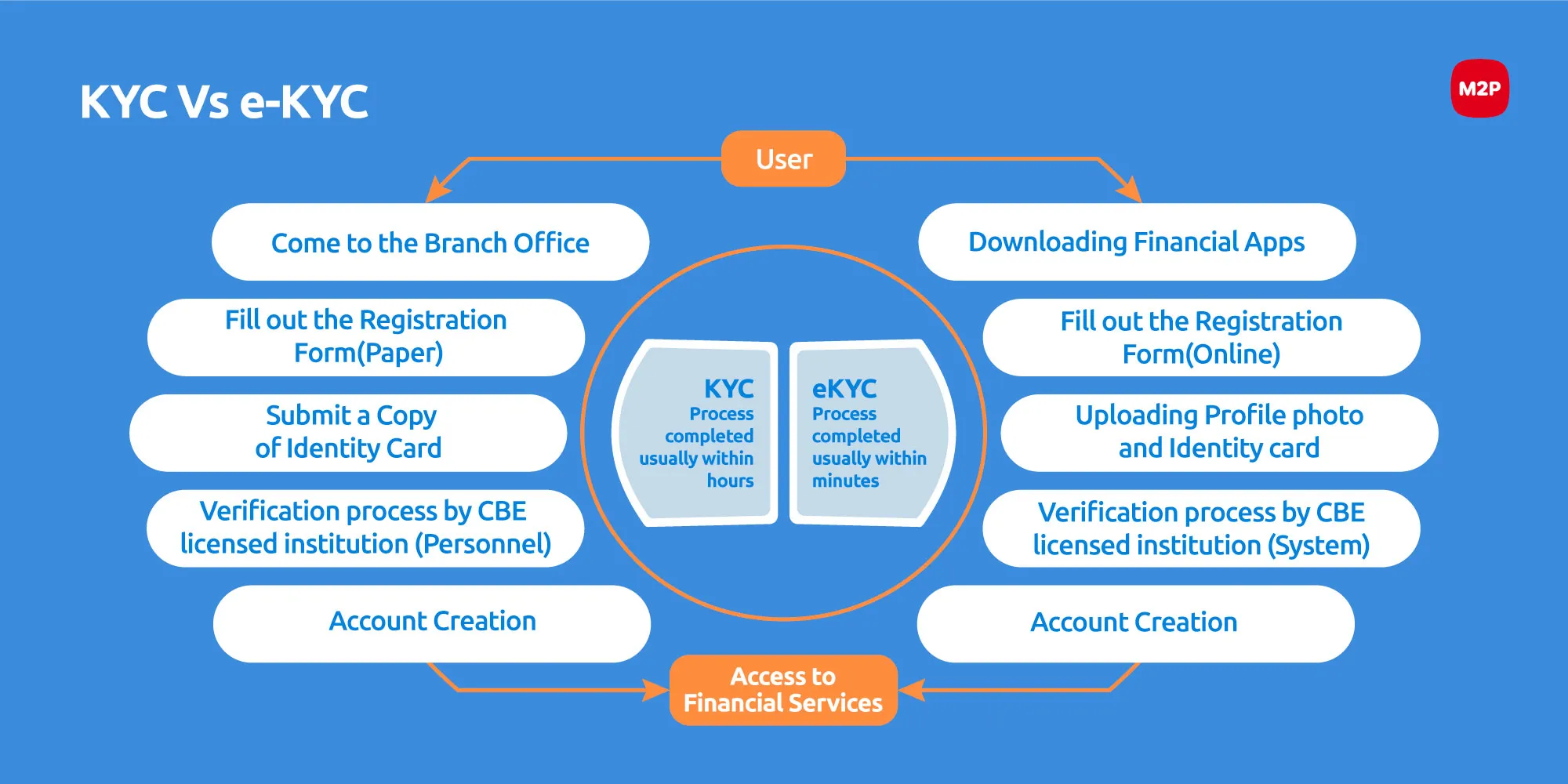
Traditional KYC workflows operate on a "collect and store" model, requiring businesses to hold sensitive documents like passports and utility bills. Zero-knowledge proofs (ZKPs) shift this infrastructure from storage to verification. Instead of uploading a scanned ID, a user generates a cryptographic proof that they satisfy specific criteria without revealing the underlying data.
This mechanism relies on three distinct actors: a trusted issuer, the user, and the verifier. The process ensures that compliance obligations are met while minimizing the data footprint available for potential breaches.

A user presents their physical identity documents to a trusted authority, such as a government agency or a licensed KYC provider. This entity performs the actual due diligence, confirming the user's age, residency, and legal status. Once verified, the issuer signs a digital credential attesting to these facts. This credential is stored on the user’s device, not in the verifier’s database.
When applying for a service, the user does not send the credential itself. Instead, they use specialized software to create a zero-knowledge proof. This proof is a mathematical statement that confirms the credential's validity and specific attributes. For example, the user can prove they are over 18 without revealing their exact birthdate. The underlying document images remain entirely private.
The fintech platform receives the proof and runs it against a public verification key. The system checks if the proof is mathematically valid and if it satisfies the required predicates. Because the proof is generated from a trusted issuer's signed credential, the verifier can be confident in the result. The platform accepts the user as compliant without ever seeing their passport or personal details.
This architecture eliminates the need for businesses to store large volumes of personally identifiable information (PII). As noted in the zkKYC concept paper by Pauwels et al. (2021), this approach removes the need for customers to share any personal information with a regulated business during the verification process. The shift from "collect and store" to "prove what's needed" significantly reduces liability and simplifies data protection compliance.
Compliance benefits for regulated fintech firms
Implementing KYC Zero offers tangible operational advantages for regulated entities. The primary benefit is the reduction of data liability. By not storing raw PII, fintech firms eliminate the risk of large-scale data breaches involving sensitive identity documents. This directly supports compliance with data minimization principles enshrined in regulations like the EU's GDPR and eIDAS 2.0.
Also, KYC Zero can streamline the user onboarding experience. Users no longer need to manually upload and wait for manual review of scanned documents. Instead, the verification is automated and instantaneous once the proof is generated. This reduces operational costs associated with manual KYC checks and improves conversion rates by removing friction from the registration process.
However, firms must ensure that their chosen zero-knowledge infrastructure meets specific regulatory standards. Not all ZK implementations are created equal; some may lack the necessary audit trails or interoperability with existing AML (Anti-Money Laundering) systems. It is crucial to select providers that offer transparent, auditable proof generation and verification processes that satisfy local regulatory requirements.
Implementation challenges and infrastructure needs
While the benefits are clear, implementing KYC Zero presents significant technical and operational challenges. The most immediate hurdle is the reliance on trusted issuers. The security of the entire system depends on the integrity of the entity that initially verifies the user's identity. If the issuer is compromised or acts maliciously, the validity of the proofs generated from their credentials is undermined.
Another challenge is the computational overhead. Generating zero-knowledge proofs can be resource-intensive, requiring significant processing power on the user's device or in the cloud. This can lead to slower onboarding times if not optimized properly. Fintech firms must invest in efficient proof generation libraries and potentially subsidize the computational costs for users to ensure a smooth experience.
Additionally, interoperability remains a key issue. Different issuers may use different cryptographic standards or credential formats, making it difficult for verifiers to accept proofs from multiple sources. The industry is working towards standardization efforts, such as those led by the Decentralized Identity Foundation, but widespread adoption of universal standards is still in progress. Firms should plan for a multi-issuer strategy to avoid vendor lock-in and ensure broad user accessibility.
Frequently asked questions about KYC Zero
What is KYC Zero?
KYC Zero is a privacy-preserving verification method where a user proves they meet specific criteria without revealing the raw data. For example, a user can prove they are of legal drinking age without disclosing their exact birthdate. This approach aligns with data minimization principles advocated by regulators like the European Data Protection Board.
How does ZK-KYC differ from standard KYC?
Standard KYC requires institutions to collect and store sensitive documents like passports and utility bills. ZK-KYC uses cryptographic proofs to validate attributes. The institution receives a "yes" or "no" regarding compliance status, not the personal information itself. This reduces the risk of large-scale data breaches and limits the institution's liability for stored PII.
Is ZK-KYC legally compliant?
Regulatory frameworks like the EU's eIDAS 2.0 and GDPR support data minimization, which ZK-KYC facilitates. However, compliance depends on the specific jurisdiction and the underlying identity provider. Institutions must ensure their ZK implementation meets anti-money laundering (AML) requirements, which often still mandate knowing the user's true identity at the issuer level, even if the verifier does not see it.
What are the main risks of adopting ZK-KYC?
The primary risks include reliance on the trustworthiness of the identity issuer and potential computational bottlenecks during proof generation. Additionally, if the cryptographic standards evolve or become vulnerable, existing proofs may become invalid, requiring users to re-verify their identity.
No comments yet. Be the first to share your thoughts!