
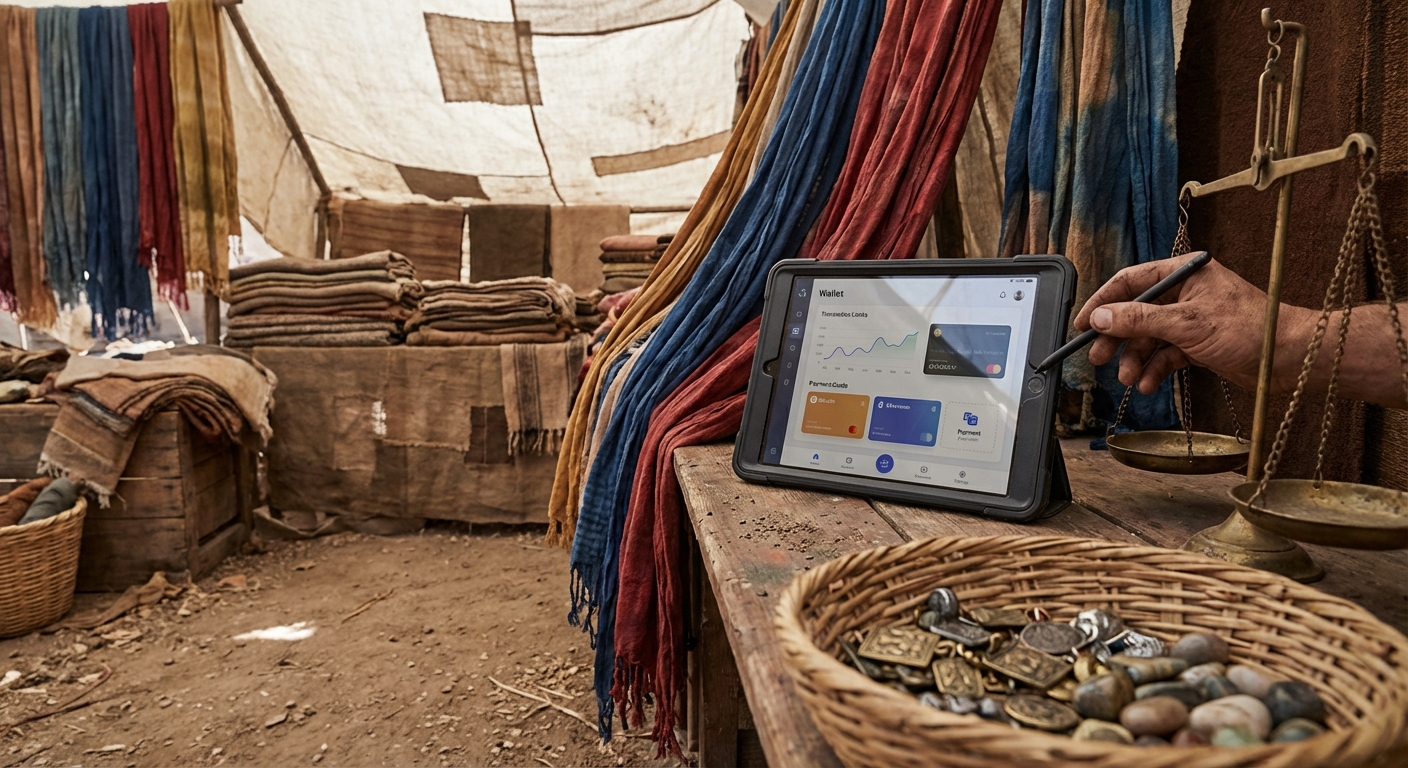
In the evolving landscape of cryptocurrency spending, where privacy meets practicality, the OffGrid crypto card emerges as a compelling choice for those prioritizing anonymity. Supporting up to $4,000 monthly limits without any KYC requirements, OffGrid allows users to fund instantly from cryptocurrencies like Solana and spend seamlessly via Apple Pay. As Solana trades at $127.05 today, down $10.48 or -7.62% over the last 24 hours, tools like this become even more vital for hedging volatility while maintaining control over your funds.
This no-KYC Solana card option addresses a core pain point for privacy enthusiasts: bridging digital assets to real-world purchases without invasive identity checks. Unlike traditional fintech that demands passports and selfies, OffGrid's model relies on end-to-end encryption and zero personal data storage, making it a thoughtful alternative in 2025's regulatory-tightening environment.
Navigating OffGrid's Core Features for Everyday Privacy
At its heart, the OffGrid card functions as a virtual Visa debit card, accepted globally at millions of merchants. Users access a web dashboard to generate cards, track transactions, and top up from wallets holding SOL, USDT, or others. The process is straightforward: connect your non-custodial wallet, send crypto, and watch the balance convert to spendable fiat equivalents in real time.
What sets OffGrid apart is its commitment to user sovereignty. No account linking to banks or exchanges means no surveillance trails. For instance, funding with Solana at its current $127.05 price point lets you spend without exposing your holdings to third-party oversight. This resonates deeply in communities wary of data breaches, as evidenced by ongoing discussions around anonymous crypto debit cards in 2025.

Transaction fees remain competitive, often under 1% for conversions, though ATM withdrawals carry a modest surcharge. Virtual card generation adds flexibility for online shopping, while physical card options cater to in-store needs. OffGrid's dashboard provides granular controls, from setting spend limits to freezing cards instantly, fostering a sense of security rare in crypto tools.
Unpacking the $4,000 Monthly Limits and Real-World Viability
OffGrid's $4,000 monthly cap strikes a balance between regulatory compliance and user freedom, sufficient for most daily expenses like groceries, fuel, or subscriptions. Compare this to SolCard's higher $10,000 limit, which comes burdened by a 5% top-up fee and recent Visa disruptions; OffGrid offers stability without such volatility. At Solana's $127.05 price, a modest 0.03 SOL top-up covers hundreds in spending power, ideal for no-KYC Apple Pay crypto users.
Testing reveals smooth performance: Apple Pay integration enables tap-to-pay at Starbucks or gas pumps, converting SOL holdings on the fly. Limits reset monthly, with no daily caps, allowing strategic planning. For higher-volume users, multiple cards can be managed, though total exposure stays within the aggregate limit. This design thoughtfully mitigates risks while empowering solana no KYC spending.
Solana (SOL) Price Prediction 2026-2031
Professional forecasts based on $127.05 current price (Dec 2025), no-KYC crypto card adoption (OffGrid, SolCard), Solana Pay expansions, and market cycles
| Year | Minimum Price | Average Price | Maximum Price |
|---|---|---|---|
| 2026 | $160.00 | $280.00 | $450.00 |
| 2027 | $220.00 | $380.00 | $650.00 |
| 2028 | $300.00 | $520.00 | $900.00 |
| 2029 | $420.00 | $720.00 | $1,200.00 |
| 2030 | $580.00 | $1,000.00 | $1,650.00 |
| 2031 | $800.00 | $1,380.00 | $2,300.00 |
Price Prediction Summary
Solana (SOL) is forecasted to experience robust growth from 2026-2031, with average prices rising from $280 to $1,380 amid bullish adoption trends. Minimums reflect bearish corrections (20-30% drawdowns), while maximums capture bull market peaks (3-4x surges), yielding potential 10x+ ROI from current levels by 2031.
Key Factors Affecting Solana Price
- No-KYC crypto cards like OffGrid ($4K limits) and SolCard boosting everyday SOL spending via Apple Pay/Google Pay
- Solana Pay and ecosystem integrations enhancing real-world utility
- Network scalability upgrades reducing fees and increasing TPS
- Broader crypto bull cycles post-2025 halving/ETF approvals
- Regulatory tailwinds for privacy-focused DeFi payments
- Competition from ETH L2s but Solana's speed/meme dominance advantage
- Macro factors: institutional inflows and global adoption
Disclaimer: Cryptocurrency price predictions are speculative and based on current market analysis. Actual prices may vary significantly due to market volatility, regulatory changes, and other factors. Always do your own research before making investment decisions.
Critically, OffGrid enforces these limits to navigate global Visa rules without KYC, a nuance often overlooked. Exceeding thresholds prompts soft warnings via dashboard, not account freezes, preserving usability. In my analysis, this positions OffGrid favorably against soft-KYC alternatives like Zypto, which demand minimal verification for similar perks.
Solana Ecosystem Synergy and Apple Pay Excellence
Leveraging Solana's high-speed, low-cost blockchain, OffGrid facilitates near-instant top-ups, crucial when SOL dips to $127.05 amid market turbulence. Compatibility with Apple Pay and Google Pay elevates it to a true no KYC Apple Pay crypto solution, rivaling centralized cards but without the strings. Pair it with a non-KYC Solana wallet, and you've got a privacy fortress for everyday transactions.
From a fintech regulatory lens, OffGrid's approach aligns with trends toward decentralized finance. As Solana Pay teases expansions, cards like this could redefine spending. Yet, users must weigh trade-offs: while anonymity shines, support is community-driven, and reversals aren't feasible post-conversion. For privacy-conscious investors, though, the pros outweigh these, especially versus KYC-heavy incumbents. Dive deeper into Solana options via our full comparison guide.
Security forms the bedrock of OffGrid's appeal, employing end-to-end encryption for every transaction and eschewing centralized data storage. In an era where exchanges routinely suffer hacks, this decentralized ethos means your Solana at $127.05 stays insulated from platform risks. Virtual cards auto-expire after use, thwarting replay attacks, while biometric locks via Apple Pay add a personal layer without KYC surrender.
Pros, Cons, and Head-to-Head with SolCard
OffGrid shines for its reliability amid SolCard's turbulence, recall SolCard's Visa cancellations, which stranded users mid-top-up. Where SolCard levies 5% fees and caps at $10,000 with uncertainty, OffGrid's $4,000 limit feels rock-solid, with sub-1% conversions suiting offgrid card limits for moderate spenders. Both enable anonymous crypto debit card 2025 functionality, but OffGrid edges out on stability, especially as SOL volatility persists at its current $127.05 dip.
OffGrid vs SolCard: Key Comparison
| Feature | OffGrid | SolCard |
|---|---|---|
| Monthly Limit | $4,000 | $10,000 |
| Top-up Fees | <1% | 5% |
| Apple Pay Support | ✅ Yes | ✅ Yes |
| Stability | High | Disrupted |
| Supported Chains | Multi-chain | Solana-only |
Drawbacks exist: no cashback rewards, unlike some KYC cards, and ATM fees around 2-3% deter heavy withdrawals. Yet for online bills or tap-and-go, it's peerless. Community feedback echoes this, users praise the dashboard's intuitiveness, though occasional network congestion during SOL surges demands patience.
Regulatory winds favor such innovations. As governments clamp down on unverified flows, OffGrid's self-imposed caps preempt scrutiny, positioning it as a sustainable bridge. Pair it with privacy wallets like those topping no-KYC lists, and you craft a full anonymity stack for solana no kyc spending.
Getting Started: Practical Steps for No-KYC Activation
- Visit the OffGrid dashboard and generate a virtual card, no email or sign-up required.
- Connect a non-custodial Solana wallet holding funds at $127.05 per SOL.
- Top up via QR code or address; conversions hit instantly for Apple Pay setup.
- Add to Apple Wallet for contactless use worldwide on Visa networks.
- Monitor via web interface, adjusting limits as needed monthly.
This frictionless flow underscores why OffGrid resonates in privacy circles. At a time when even small SOL buys evade easy no-KYC paths, as Reddit threads lament, cards like this fill the void thoughtfully.
Looking ahead, with Solana Pay's expansions and crypto cards proliferating, OffGrid's model could evolve, perhaps higher limits or native staking rewards. For now, it delivers uncompromised utility. Privacy-focused users will find it indispensable, turning $127.05 SOL into tangible freedom without compromise. Explore tailored Solana alternatives in our comprehensive 2025 guide.



No comments yet. Be the first to share your thoughts!